.svg)
TheraHive’s DBT Profile series highlights the innovators, advocates, and leaders shaping the world of mental health. Each profile shows how their passion and dedication are changing lives through Dialectical Behavioral Therapy (DBT).
What if the key to transforming relationships wasn’t about fixing others, but understanding them?
That question sits at the heart of Dr. Alan Fruzzetti’s work. A psychologist, researcher, and internationally recognized DBT trainer, Alan has devoted his career to helping people reduce conflict, strengthen relationships, and rebuild trust through one of DBT’s most powerful and human tools: validation.
A longtime colleague of Marsha Linehan, the founder of DBT, Alan helped extend her groundbreaking model from the individual to the interpersonal, bringing DBT’s principles into the fabric of families, couples, and communities. His work bridges the gap between emotional science and everyday relationships, showing that compassion and accuracy can coexist even in moments of pain, anger, or misunderstanding.
For TheraHive, Alan’s impact is deeply collaborative. His research and teaching on DBT for families directly shaped our Parent DBT Skills Group program, and we’ve had the privilege of working with him to create accessible educational content like Understanding the Transactional Model of Emotion Dysregulation in Family Interactions His frameworks for communication and validation continue to guide how we help families build understanding, connection, and lasting change.
A Lifelong Student and Teacher of DBT
Alan Fruzzetti earned his Ph.D. in Clinical Psychology from the University of Washington, where he trained under Dr. Marsha Linehan, DBT’s creator. Working alongside her during DBT’s formative years, he helped refine the model’s application beyond individuals in crisis, exploring how emotional dysregulation affects relationships and how families can heal together.
Today, Alan is a Professor of Psychology at the University of Nevada, Reno, and the Director of the DBT and Family Studies Lab. He is also a trainer with Behavioral Tech, where he has taught and supervised hundreds of clinicians in DBT principles worldwide.
What Makes His Work Important
Alan Fruzzetti is best known for developing DBT for families, couples, and high-conflict relationships, an adaptation of DBT that focuses on healing relational ruptures and creating emotional safety. His research and clinical models have shown that when families learn to validate emotions rather than react to them, both conflict and emotional suffering decrease dramatically. Three pillars define his contributions:
DBT for Families and Couples
Alan’s Family Connections program, co-developed with Perry Hoffman and NEA-BPD, has been implemented globally to help families of individuals with borderline personality disorder (BPD) and emotion dysregulation. The program teaches core DBT skills – mindfulness, validation, emotion regulation, and problem-solving – in a way that helps families respond effectively rather than react impulsively.
“Families don’t need to fix their loved one,” Alan often says. “They need to understand them – and themselves – more clearly.”
In the presentation below, Dr. Fruzzetti dives into the transactional nature of family interactions, showing how emotional dysregulation and invalidation can create painful cycles—and how those same dynamics can become powerful opportunities for healing.
He highlights research demonstrating that improving family communication and validation not only enhances relationships but can also reduce suicidality and self-harm for individuals struggling with intense emotions.
Validation as a Transformative Skill
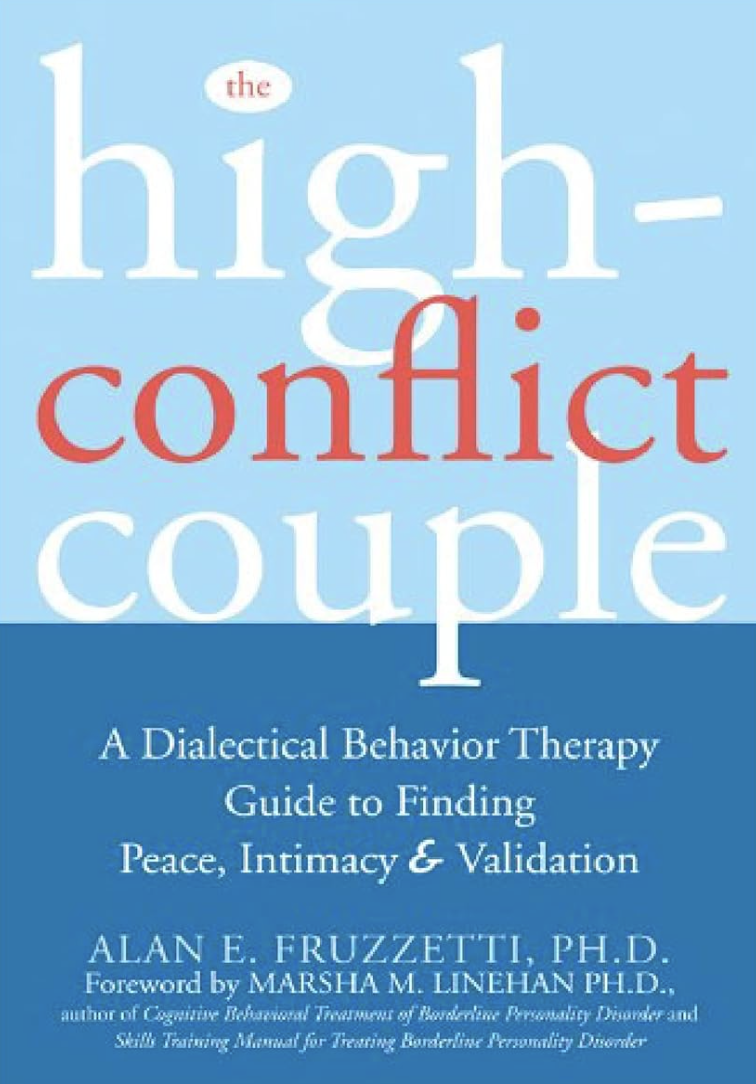
Validation – the act of acknowledging another person’s experience as understandable – is at the heart of Alan’s teachings. Through years of research and clinical practice, he has deonstrated that validation not only reduces emotional arousal but also opens the door to problem-solving and reconciliation. His book The High-Conflict Couple offers a practical, skills-based roadmap for couples struggling to break out of cycles of blame and escalation.
In the video below, Dr. Fruzzetti breaks down one of the most essential – and misunderstood – skills in DBT: validation. He explains how even well-intentioned invalidation can heighten emotional distress, while accurate, compassionate validation helps family members calm down, feel understood, and reconnect. Watch as he shares practical insights and real-world examples that make validation accessible to anyone navigating family stress, conflict, or emotional dysregulation.
Bridging Research and Real Life
Alan’s research consistently shows that emotional dysregulation doesn’t occur in isolation – it happens in relationships. His work has extended DBT into diverse settings, including schools, correctional facilities, and community clinics, ensuring that DBT skills reach people wherever they live and work.
Breaking the Cycle: The Transactional Model of Emotion Dysregulation
When emotions run high, relationships can quickly spiral into misunderstanding and conflict. Dr. Alan Fruzzetti’s Transactional Model of Emotion Dysregulation explains how this happens—and how to stop it.
In this TheraHive video series, Alan breaks down how emotional dysregulation unfolds between people: how one person’s distress can trigger another’s, and how patterns of invalidation and inaccurate expression keep the cycle going. Most importantly, he shows how skills like accurate expression and validation can restore connection and calm.
It’s a powerful look at why family interactions can be both our greatest source of pain and our greatest opportunity for healing.
Why It Matters
DBT is often thought of as an individual therapy, but Alan Fruzzetti has shown that its true strength lies in relationships. His work reminds us that emotions are contagious, and healing can be, too. When one person learns to regulate, validate, and stay present, it changes the emotional climate for everyone around them.
At TheraHive, Alan’s teachings on validation and mindful communication continue to shape how we support families learning DBT together. Our Parent DBT Skills Group program draws heavily from his Family Connections framework, giving loved ones tools to manage conflict, understand emotion, and strengthen connection in the moments that matter most.
For anyone navigating the ups and downs of emotional intensity in relationships, Alan’s work is a reminder that repair is always possible and that connection, once lost, can be rebuilt through skill, patience, and compassion.
Final Thought
At its heart, DBT is about more than managing emotions – it’s about creating understanding where there was once confusion, and connection where there was once pain. Dr. Alan Fruzzetti’s work embodies that mission. By bringing validation, empathy, and science together, he has helped countless individuals and families transform conflict into connection, and suffering into understanding.
Alan’s work reminds us that emotional growth happens in relationships—with ourselves, our partners, and our families. At TheraHive, we carry that legacy forward through programs that help people apply DBT skills in everyday life. In our Adult DBT Skills Group, participants learn to regulate emotions, communicate effectively, and strengthen connection, while our Parent DBT Skills Group helps caregivers bring those same tools into family life—reducing conflict, increasing understanding, and building a foundation of compassion at home.
{{promo-banner-1}}


.svg)
.svg)
.svg)


.avif)