
DBT for Codependency

Codependency can make it surprisingly easy to lose track of where someone else ends and you begin. Over time, constantly prioritizing someone else can make your own preferences feel unfamiliar. Dialectical Behavior Therapy (DBT) offers a practical way to interrupt that pattern by learning how to notice the urge to overextend yourself without automatically acting on it, tolerate the discomfort of letting others manage their own emotions, and build relationships without abandoning yourself in the process. Explore how each DBT module applies to codependency and what the research says about the approach.
Jump to the topics:
Overview of DBT for Codependency
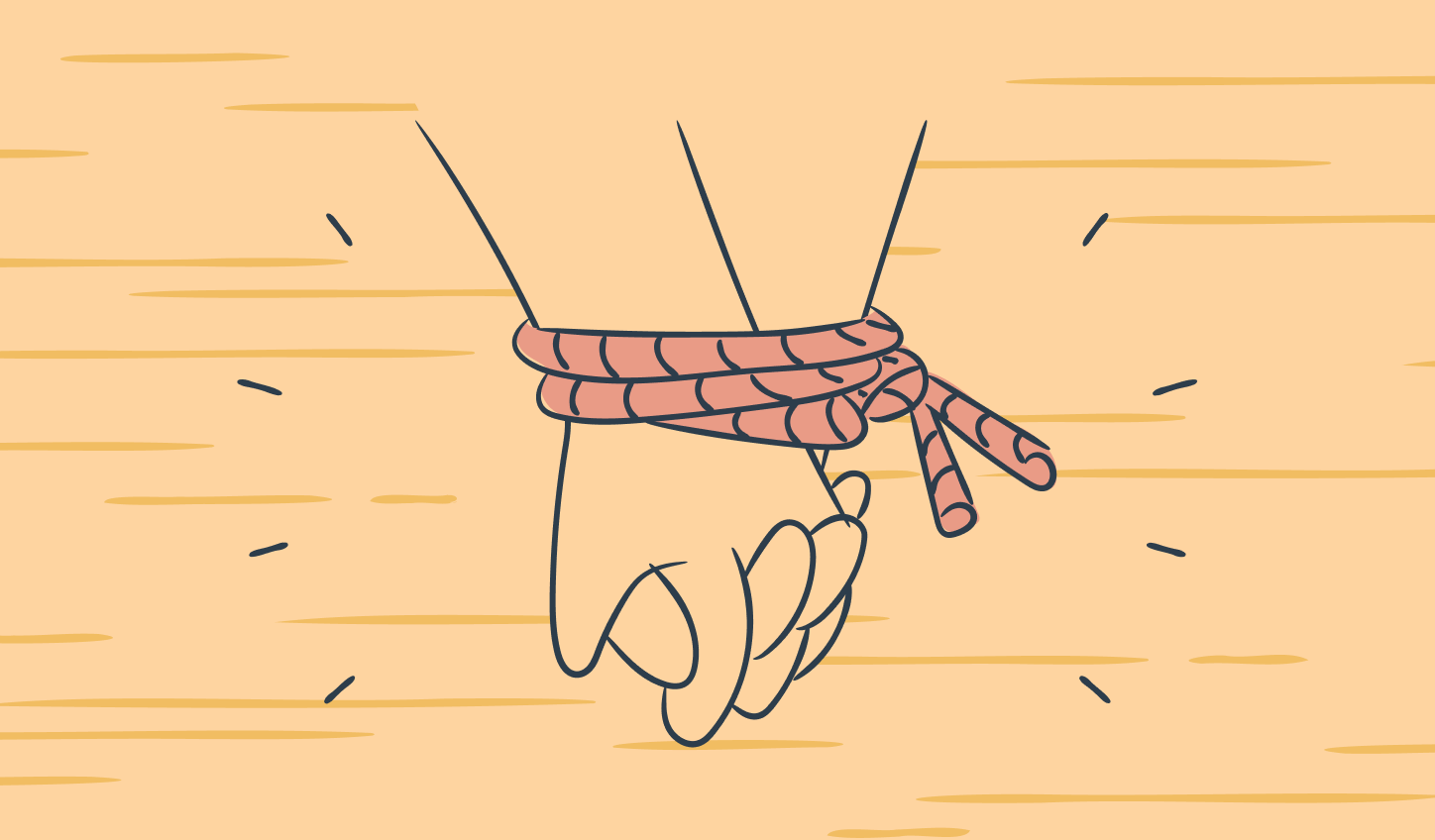
Codependency isn't a diagnosis. It doesn't appear in the DSM-5-TR or the ICD-11, and clinicians still disagree about exactly where to draw its edges. What the term tries to capture is fairly consistent across that disagreement, though: a rigid, learned habit of orienting around another person's needs, moods, or crises to the point that a person's own identity and wellbeing get pushed to the side. Dialectical Behavior Therapy (DBT), developed by psychologist Marsha Linehan in the 1990s to treat chronic suicidality and borderline personality disorder, wasn't built with codependency in mind at all. Its four skill modules, taught and rehearsed directly rather than mainly talked through, still line up closely with what keeps this pattern running once it takes hold.
Part of that overlap comes down to what tends to sit underneath codependency in the first place. A recent integrative review of co-dependency research found that despite decades of disagreement over how to define the construct, it consistently tracks with emotional suppression, interpersonal control, and family dysfunction, a pattern of managing one's own feelings by managing someone else's instead of sitting with them directly. Many people who grow up in homes where a caregiver's mood was unpredictable, or where a child ends up steadying the adult rather than the reverse, learn to read a room for danger well before they learn to notice what they themselves are feeling. DBT's four modules were built almost entirely around that same difficulty, teaching people concrete ways to notice, tolerate, and act on what's happening internally instead of defaulting to managing someone else's experience instead. That's the redirection each of the following four modules is built to practice:
- Mindfulness slows down the reflex to read someone else's mood before your own. Codependency trains a kind of outward vigilance that can register a partner's irritation almost instantly while leaving a person with no idea whether they're hungry, tired, or upset about something else entirely. Mindfulness teaches the difference between noticing an urge to manage that mood and acting on it automatically, which is often the first opening a person gets to interrupt the pattern at all.
- Distress tolerance covers the moment insight can't reach yet. Not every urge to rescue arrives on a schedule that allows for reflection. This module supplies fast, physical tools for the few minutes when the only realistic goal is getting through the pull to intervene without acting on it.
- Emotion regulation addresses what builds up before the guilt takes over. The urge to fix someone else's crisis rarely appears out of nowhere; it tends to follow a buildup of anxiety about what happens if you don't. This module works on that buildup directly, along with the reflexive caretaking that keeps the pattern feeding itself once it starts.
- Interpersonal effectiveness keeps connection from requiring self-erasure. Codependency makes staying quiet about your own needs feel like the price of the relationship, even though it usually costs more than it protects. This module gives people concrete ways to ask for what they need and hold a limit without the relationship depending on constant rescue.
Codependency rarely shows up as a single, isolated problem, which is part of why these four modules aren't meant to be worked through strictly one at a time. Skills from different modules can be paired together to shift a behavior in the moment, noticing the urge to rescue with a mindfulness skill, then working the guilt underneath it with an emotion regulation one, rather than treating each module as a separate toolkit reached for on its own. Learn more about skill stacking in the case study below.
This page covers each of the four modules in more depth along with what the research says about why the approach holds up for codependency specifically, not just for the conditions DBT was originally designed to treat. Together, they give someone a way to work against a lifelong caretaking pattern from more than one angle at once, getting through the hardest moments of pulling back while also addressing the habits that keep pulling someone back into the same role.
DBT vs. Other Treatments
Codependency doesn't have one standard treatment protocol the way some conditions do, which means a few different therapeutic approaches tend to come up in the same conversation. CBT, Schema Therapy, family systems work, and psychodynamic therapy all offer real, well-established ways of understanding the pattern, and a recent integrative review of codependency's conceptualization and mental health outcomes reflects just how much the construct spans emotional, relational, and identity-based territory at once. DBT isn't positioned to replace any of these approaches so much as to fill in a piece the others tend to emphasize less: real-time, in-the-moment skills for the exact situations where codependent behavior actually happens, not just the beliefs underneath it.
CBT and Schema Therapy are the closest cousins here, and the overlap is real. Both trace codependency back to specific convictions, that a person is only worth something if they're needed, that setting a boundary will end the relationship, that someone else's crisis is automatically their job to solve, and work to dismantle those beliefs through cognitive restructuring and, in Schema Therapy's case, tracing them back to patterns like Self-Sacrifice or Subjugation that formed early on. A systematic review and meta-analysis on maladaptive schemas formed through adverse early experiencessupports this link between early invalidating environments and the self-sacrificing, subjugated relational patterns Schema Therapy targets directly.
On the outcomes side, a study on the psychological rehabilitation of individuals with codependency alongside substance and behavioral addictions found that longer, structured CBT-based protocols produced real improvements in quality of life and symptom severity. What this branch of treatment tends to emphasize less is the moment-to-moment piece: what to actually do with your hands and your voice when a partner is spiraling and the old instinct is to jump in and fix it. That's the gap DBT's skills modules, particularly interpersonal effectiveness and distress tolerance, are built to close, less by replacing the cognitive work and more by giving it something concrete to run on when insight alone isn't enough in the moment.
Family systems approaches, often built on Bowenian theory, look at codependency from a wider angle entirely. A paper describing codependency as another name for Bowen's undifferentiated self frames the pattern as a feature of the whole family's emotional system rather than an individual's isolated issue, with self-differentiation, becoming a distinct, autonomous person while still staying connected, as the central goal. Consistent with this, codependency has also been described in the literature as a family addiction, with treatment often involving referral toward peer-support communities like Al-Anon. That systemic lens catches something DBT doesn't reach on its own, the historical, multi-generational script a person is stepping into. What it offers less directly is a set of skills for the acute moment: how to actually say no to a parent or partner in real time, or how to sit with the anxiety of doing so without immediately backing down. That's often where a DBT skills foundation and family systems work end up complementing each other rather than competing.
Psychodynamic therapy goes deeper still, treating compulsive caretaking as an unconscious defense. A paper on entitlement in codependency makes the case that outwardly self-effacing, deferential caretaking can function as a subtle form of narcissistic entitlement, a way of protecting a fragile sense of self by fusing with someone else rather than risking the loss of them outright, a dynamic explored further in research connecting narcissism, shame, and addiction. Working through that takes time and an ongoing therapeutic relationship, and it can produce a kind of structural change in how a person relates to others that skills training alone doesn't reach, but that depth comes at a cost: psychodynamic work isn't built to hand someone a concrete tool for the Tuesday night their partner is in crisis and the old urge to rescue is at full volume. DBT's modules, especially opposite action and the distress tolerance skills, are built almost entirely for that kind of moment, and research on DBT skills use as a driver of improvement in identity and relational functioning suggests it's the consistent practice of these skills, not just exposure to the concepts, that tends to move the needle.
Peer support offers a different kind of entry point altogether. Co-Dependents Anonymous is a twelve-step fellowship built specifically around codependency, free to attend and run entirely by members working through the same Steps and Traditions used in other twelve-step programs. It doesn't offer structured skills training or a clinical framework the way DBT does; what it offers instead is ongoing community with people who recognize the pattern from the inside, which can matter as much as any specific technique for someone who has spent years feeling like the only one wired this way. The two aren't in competition, and plenty of people use a CoDA meeting alongside DBT skills practice, one for community and steady accountability, the other for the concrete, in-the-moment tools this page covers.
None of this makes DBT the "correct" choice over the others; it makes it a strong starting point. Codependency tends to respond well to a phased approach: DBT or structured skills training first, to build emotional regulation and enough boundary practice to function day to day, followed by the slower, deeper work of psychodynamic or family systems therapy to address the attachment wounds and family patterns underneath. Used together rather than as competing options, the combination tends to cover more ground than any one approach does alone.
Psychoeducation as a Starting Point for Codependency
Most people who suspect they're codependent don't arrive at that word through a clinician. They arrive at it through a friend's offhand comment, a book picked up at random, or a late-night scroll through posts describing a pattern that sounds uncomfortably familiar. That's part of what makes psychoeducation useful here in a way that's a little different from other conditions: the term is already circulating everywhere, loosely and often inaccurately, and a structured, skills-based introduction to what the pattern actually involves does something that another self-help article can't. It gives someone a way to test the label against their own life with some precision, and then gives them something concrete to do about it, rather than leaving them with a diagnosis-shaped word and no next step.
That distinction between naming a pattern and changing it turns out to matter more than it might seem. A lot of people who land on the word "codependent" already have real insight into their own habits; they can describe, often in detail, how they got so good at reading someone else's mood. What tends to be missing isn't understanding. It's a working alternative to reach for in the moment the old pattern kicks in. A study examining what actually drives symptom improvement in DBT treatment for borderline personality disorder found that participants who went through skills training ended up using roughly three times as many concrete DBT skills as those in a comparison condition, and that this increase in skills use, not simply exposure to the ideas behind them, statistically accounted for the reductions in dysfunctional behavior researchers observed. Insight opened the door. Rehearsed skill use is what walked through it.
Whether that kind of change requires the full apparatus of individual therapy is a separate question, and one the research has looked at somewhat directly. A three-month randomized trial comparing a standalone DBT skills training group to standard group therapy found meaningfully lower dropout among participants in the skills-only condition, along with larger improvements across mood, irritability, and affect instability, evidence that a structured, psychoeducational group format can do real work even without one-on-one clinical treatment layered on top of it.
This is the model TheraHive builds on: a live, group-based space where DBT's four modules get taught and practiced directly, rather than left as concepts to read about alone. The sessions are psychoeducational, not psychotherapy and not a treatment for any diagnosis, codependency included. The goal is teaching and rehearsing skills, alongside whatever individual therapy or family work a person may already be doing, not replacing it. For a pattern that often develops precisely because someone learned to put everyone else's needs ahead of getting their own support, a lower-friction way to start, one that doesn't require first convincing a partner or family member to participate, tends to matter quite a bit.
Mindfulness: Learning to Notice Your Own Experience Again
Codependency trains a specific kind of attention, one that stays outward and constantly tuned to someone else's state before your own. Someone can walk into a room and register almost instantly that their partner is irritated, without having any real sense of whether they themselves are hungry, tired, or upset about something else entirely. Mindfulness is the DBT module built to interrupt that habit, and it works through a set of specific skills that get practiced directly rather than through a vague instruction to be more present.
Observe is usually the starting point. It means noticing an internal experience as it happens, before deciding what to do about it. That might be a tightening in the chest or an urge to check in on someone. For a person with a codependent pattern, this often means catching the urge to fix a partner's bad mood the moment it shows up, instead of already being three steps into managing it before realizing there was ever a choice to make. The exercises built around this skill aren't about emptying the mind. They're about creating a small gap between an urge arriving and a person acting on it automatically.
Describe follows Observe and asks for something more exact. It means putting what was just noticed into plain, factual language instead of a sweeping judgment. "I'm having the urge to smooth this over" reads differently than "I have to fix this," even though the two tend to collapse into one without much practice. That distinction, worked at quietly and repeatedly, is often the first real leverage a person gets over a caretaking response that used to feel automatic.
One-mindfully addresses a related pattern, the habit of doing one thing while a separate track runs underneath it. Someone can be half-present in a conversation because part of their mind is already managing another person's evening. Practicing this skill means deliberately bringing attention back to what's actually happening, whether that's a meal, a task, or the person in front of you, each time it drifts toward monitoring someone else's parallel life. It won't stop that pull from showing up. It just gives a person somewhere to keep returning their attention to instead.
Nonjudgmentally tends to matter most for how someone treats themselves through all of this. A pattern built around managing other people's reactions usually comes loaded with self-criticism the moment it's interrupted, something like "I should have checked on them" or "I'm being selfish for resting." Practicing nonjudgmentally means describing what happened, "I noticed the urge and didn't act on it that time," without immediately layering a verdict on top of it. That layering is exactly the kind of thought Observe and Describe are built to catch in the first place.
Underneath all four of these sits Wise Mind, the place these skills are ultimately building toward, where emotion and reason inform each other instead of one overriding the other. A person who can observe an urge, describe it accurately, and hold it without judgment has actually created enough space to consult that steadier place before acting.
Try one of our brief and calming mindfulness exercises below. For the full playlist of free mindfulness exercises, visit our YouTube channel.
Distress Tolerance: Crisis Survival Tools for Breaking the Rescue Reflex
There's a specific kind of moment distress tolerance is built for, and it isn't the general discomfort of watching someone else struggle. It's the moment when the urge to intervene is loud enough that thinking clearly isn't available yet, and the only realistic goal is getting through the next few minutes without acting on it. These moments show up unpredictably for someone with a codependent pattern. A partner texts something upsetting and the pull to respond immediately overrides everything else, or a family member's crisis lands in the middle of a workday and the instinct to drop everything takes over before there's time to weigh it.
The distress tolerance techniques taught here stay intentionally simple, because complexity is exactly what a flooded, urgent-feeling moment can't process. Splashing cold water on the face or holding an ice pack against the wrists, paired with a short burst of hard movement and some slow counted breathing, works on the body directly instead of asking the mind to argue itself out of anything. This combination is often taught as the TIP skill, and it matters because a mind in the middle of an urge isn't especially reasonable to begin with. Someone whose caretaking reflex tends to fire hardest late at night, once a partner's mood has been building all evening, might use exactly this kind of physical reset. The point isn't to resolve the underlying pattern. It's to buy enough distance from the urge to get through the worst of it without acting on autopilot.
The STOP skill covers a slightly different moment, the one where a person catches themselves reaching automatically for the phone or the car keys or a rescue plan and deliberately pauses before going any further. Stopping, stepping back, and observing what's actually happening rather than what feels urgent gives a person the seconds they usually skip past entirely, and a response can be chosen instead of defaulted to.
Radical acceptance sits underneath both of these, and it's often misread as agreeing that everything is fine. It's closer to the opposite. It means acknowledging, without flinching, that someone else is struggling right now and that you are choosing not to fix it, so that the energy that would otherwise go into fighting that fact can go toward actually tolerating it. A codependent pattern doesn't need a person to also be at war with the discomfort of holding still. That second fight, insisting the discomfort shouldn't be happening in the first place, is often what turns a hard ten minutes into a full relapse back into old habits.
Emotion Regulation: Interrupting the Guilt That Drives Caretaking
Emotion regulation starts from an assumption that's easy to miss: an emotion has to be named accurately before it can be worked with, and codependency is particularly good at scrambling that first step. Guilt tends to blend with fear of abandonment and a genuine wish to help until the whole mixture gets labeled simply as "I need to help," when what's actually underneath it is often closer to anxiety about what happens if you don't.
Checking the facts is one of the more direct tools here. A thought like "if I don't handle this, everything will fall apart" feels, in the moment, like a plain observation. DBT treats it as a claim that can be tested. Has this actually happened before when you stepped back, or is it a prediction that's never been checked against evidence? When the claim doesn't hold up, the work becomes changing the emotion it produced. When there's a real, immediate safety concern, the situation calls for a different kind of response entirely, and DBT treats that distinction seriously rather than encouraging blanket detachment.
Opposite action works from the other direction, meaning a person acts deliberately against an urge the facts don't support. If the guilt says "you have to respond right now or you're a bad partner," opposite action might mean waiting an hour before replying. That's not coldness. The urge to respond instantly is often driven by the guilt itself rather than by anything the situation actually requires. Practicing this skill, repeated enough times, is what shifts a reflex that's been running on autopilot for years.
Alongside the thinking side of the module sits something more physical, reducing the everyday wear that lowers a person's threshold for getting swept into someone else's crisis in the first place. Poor sleep does this on its own. So does skipping meals, or simply running on empty for too long. A codependent pattern often runs hardest exactly when someone hasn't eaten or slept, which makes rebuilding even one of these basics matter more than it might seem to on paper.
Accumulating positives works on a longer timescale. It means deliberately noticing and registering things that are good independent of anyone else's approval, a finished task, a quiet hour alone that didn't get interrupted by someone else's need. For someone used to measuring their day entirely by how well another person's crisis was managed, this is often the first practice that puts anything else on the ledger at all.
For a deep dive on opposite action and other emotion regulation skills, check out the Thriving With DBT podcast episode below where TheraHive co-founder Dr. Alicia Smart walks through the skills in real-time with a real TheraHive student.
Interpersonal Effectiveness: Staying Connected Without Losing Yourself
Interpersonal effectiveness is where codependency shows up most visibly, because the pattern is, at its core, a relational one. The skills in this module aren't about becoming less caring. They're about giving that caring a shape that doesn't require disappearing into someone else's needs to sustain it.
Sometimes the task is asking for something directly, whether that's more space, less last-minute crisis management, or simply a partner willing to handle their own appointments. DEAR MAN handles this by walking through describing the situation factually, expressing feelings without hinting at them, and then asserting the actual request instead of hoping it gets inferred. For someone with a codependent pattern, the Mindful step usually matters most, since it means staying focused on the actual ask even when the conversation drifts toward reassuring the other person that everything is still fine. Appearing calm while making the request, even when confidence is the last thing being felt internally, is what turns a vague sense of resentment into something someone can actually act on.
Other times the harder move is holding a limit without turning it into an apology tour. Codependency tends to load ordinary limits, like not answering a call immediately or declining to cover for someone again, with far more guilt than the situation calls for. FAST is built for resisting that instinct. It asks a person to be fair to both people in the exchange, skip unnecessary apologies, stick to their own values instead of overriding them to keep the peace, and stay truthful instead of softening the answer into something easier to deliver. Stating the limit once, clearly, without extra justifications stacked on top of it, is the harder part, and it's the piece FAST is actually training for.
GIVE handles a different problem: staying warm and connected in a relationship without absorbing responsibility for the other person's every emotional state. Being gentle in tone, genuinely interested in what the other person is going through, and validating that their frustration makes sense, even without agreeing to fix it, tends to do more for a relationship than stepping back in to manage the outcome. Skills like this one are what make it possible to stay close to someone without the closeness depending on constant rescue.
Research on DBT for Codependency and Relational Dysregulation
Direct trials on codependency specifically are still scarce, which is consistent with the fact that it isn't a formal diagnosis researchers have organized large studies around. What the evidence base does support clearly is DBT's effect on the mechanisms that tend to drive the pattern: emotional dysregulation, difficulty tolerating distress, and attachment-related anxiety in close relationships.
A large Cochrane systematic review of psychological therapies for borderline personality disorder found that disorder-specific psychotherapies, DBT among them, produced clinically meaningful reductions in symptom severity compared with treatment as usual, with particular strength in the areas of emotional instability and interpersonal functioning that also sit at the center of codependent patterns.
A separate pilot randomized controlled trial testing DBT skills training as a stand-alone treatment examined whether the four modules could work on their own, without the individual therapy and coaching that come with comprehensive DBT. Among adults with anxiety and depression who didn't have a BPD diagnosis, the skills-only group produced substantial reductions in emotion dysregulation over sixteen weeks, evidence that a well-run skills group, on its own, can move the needle on the underlying difficulty rather than just teaching concepts about it.
Neuroimaging research adds a different kind of support. A study predicting treatment outcomes from prefrontal cortex activation in patients undergoing DBT found that lower activation in the dorsolateral prefrontal cortex during impulse control tasks, before treatment began, predicted the largest reductions in self-destructive behavior afterward, pointing to the same brain region involved in overriding an automatic urge in favor of a considered response.
In a related line of work, a longitudinal fMRI study following patients through one year of outpatient DBT found measurable shifts in brain activity tied to attachment representation, changes the researchers linked to a growing capacity to regulate the kind of intense emotional response that abandonment fears and relational panic tend to produce.
Attending dialectical behavior therapy groups consistently, rather than simply learning about the skills once, is what the mechanism research points to as the actual driver of change. Early data on virtual DBT skills training suggests skill acquisition and symptom reduction hold up about as well online as they do in person, which matters for a pattern like codependency that often involves scheduling one's own time entirely around someone else's needs. A format that removes commuting, childcare, or timing a session around a partner's mood tends to translate into showing up more consistently, and consistency is what this research base points to as the thing that actually matters.
Finding a Way Back to Yourself
Codependency responds to different entry points depending on where it's causing the most damage right now. Some people start with distress tolerance because they're in the middle of a relationship crisis and need something for tonight. Others start with interpersonal effectiveness because a specific conversation, the one they've been avoiding for months, is what finally pushed them to look for help. What tends to matter more than the entry point is repetition, coming back to the skills often enough that stepping back from a rescue starts to feel less like an emergency and more like a choice.
If the mindfulness, distress tolerance, emotion regulation, and interpersonal effectiveness skills covered here sound like tools that could fit into your own patterns, our online DBT skills groups walk through this same four-module structure with a trained facilitator and a small group of peers working through similar relational habits. It's one option worth considering for readers who want structured, guided practice building a sense of self that doesn't depend on managing someone else's.
A full skills group is also a real commitment, and it's completely reasonable to want a lower-stakes way to find out whether DBT is a fit before signing up for a multi-week program. Our free Navigating DBT mini course is built for exactly that: a shorter, no-cost introduction to the same four modules covered on this page, with no obligation to continue further. However far you decide to take it from here, starting small still counts as starting.
Frequently Asked Questions
Is codependency a mental health diagnosis?
No. Codependency doesn't appear in the DSM-5-TR or the ICD-11. Clinicians and researchers use it to describe a relational pattern, prioritizing another person's needs to the point of self-neglect, rather than a formal disorder, though the pattern is real and can be worked with directly using structured skills.
Can DBT help even if the other person in the relationship doesn't change?
Yes. DBT's skills are built around what an individual can do regardless of anyone else's willingness to participate. Distress tolerance and interpersonal effectiveness skills in particular are designed to help someone hold a different pattern even in a relationship that stays exactly the same.
How is DBT for codependency different from Al-Anon or peer support groups?
Peer support groups like Al-Anon offer shared experience and community, which has real value on its own. DBT skills groups add a structured, skills-based curriculum, specific tools practiced weekly and applied to real situations, rather than a primarily discussion-based format. The two aren't mutually exclusive, and some people find value in combining them.
How do online DBT skills groups work for codependency?
An online DBT skills group typically meets weekly with a small group of participants and a trained facilitator, moving through the same four modules covered on this page. Sessions are psychoeducational rather than individual psychotherapy, meaning the focus stays on learning and rehearsing skills in a structured group format, meant to complement any therapy a person is already receiving rather than replace it.
What's the first sign DBT might be a good fit for codependency?
If pulling back from managing someone else's mood or crisis produces real physical panic, not just discomfort, that's often a sign distress tolerance and emotion regulation skills specifically, rather than insight alone, are what's needed to make a limit stick.
What happens in a DBT skills group session?
A typical session opens with a short mindfulness exercise, checks in on how the past week's skill practice went, teaches one new skill from that week's module with concrete examples, and closes with a specific practice assignment for the coming week. Sessions are structured and group-based rather than open-ended discussion.
Participants aren't required to share more than they're comfortable with, and the format stays consistent from week to week. Over the course of a program, sessions move through all four modules in sequence: mindfulness, distress tolerance, emotion regulation, and interpersonal effectiveness.
References
Farmer, S. A. (1999). Entitlement in codependency: Developmental and therapeutic considerations. Journal of Addictive Diseases
Fagan-Pryor, E. C., & Haber, L. C. (1992). Codependency: Another name for Bowen's undifferentiated self. Perspectives in Psychiatric Care
Flechsig, A., Bernheim, D., Buchheim, A., Domin, M., Mentel, R., & Lotze, M. (2023). One Year of Outpatient Dialectical Behavioral Therapy and Its Impact on Neuronal Correlates of Attachment Representation in Patients with Borderline Personality Disorder Using a Personalized fMRI Task. Brain Sciences
Grosch, W. N. (1994). Narcissism: Shame, rage and addiction. Psychiatric Quarterly
Ibragim, A., Issatayeva, B., Kuanzhanova, K., Mandykayeva, A., & Mambetalina, A. (2025). Psychological rehabilitation of individuals with alcohol use disorder, drug addiction, gambling disorder, and codependency. Acta Psychologica
Molina, E., Taiwo, A., & Grey, B. (2026). Co-Dependency Revisited: An Integrative Review of Conceptualisations and Mental Health Outcomes. Clinical Psychology & Psychotherapy
Mulry, J. T. (1987). Codependency: A family addiction. American Family Physician
Neacsiu, A. D., Eberle, J. W., Kramer, R., Wiesmann, T., & Linehan, M. M. (2014). Dialectical behavior therapy skills for transdiagnostic emotion dysregulation: A pilot randomized controlled trial. Behaviour Research and Therapy
Prillinger, K., Goreis, A., Macura, S., Hajek Gross, C., Lozar, A., Fanninger, S., Mayer, A., Oppenauer, C., Plener, P. L., & Kothgassner, O. D. (2024). A Systematic Review and Meta-Analysis on the Efficacy of Dialectical Behavior Therapy Variants for the Treatment of Post-Traumatic Stress Disorder. European Journal of Psychotraumatology
Ruocco, A. C., Rodrigo, A. H., McMain, S. F., Page-Gould, E., Ayaz, H., & Links, P. S. (2016). Predicting Treatment Outcomes from Prefrontal Cortex Activation for Self-Harming Patients with Borderline Personality Disorder: A Preliminary Study. Frontiers in Human Neuroscience
Soler, J., Pascual, J. C., Tiana, T., Cebrià, A., Barrachina, J., Campins, M. J., Gich, I., Alvarez, E., & Pérez, V. (2009). Dialectical behaviour therapy skills training compared to standard group therapy in borderline personality disorder: A 3-month randomised controlled clinical trial. Behaviour Research and Therapy
Stepp, S. D., Epler, A. J., Jahng, S., & Trull, T. J. (2008). The effect of dialectical behavior therapy skills use on borderline personality disorder features. Journal of Personality Disorders
Stoffers-Winterling, J. M., Völlm, B. A., Rücker, G., Timmer, A., Huband, N., & Lieb, K. (2012). Psychological therapies for people with borderline personality disorder. Cochrane Database of Systematic Reviews
Bruysters, N. Y. F., Pilkington, P. D., et al. (2023). Overprotective parenting experiences and early maladaptive schemas in adolescence and adulthood: A systematic review and meta-analysis. Clinical Psychology & Psychotherapy




.avif)