DBT for OCD

Living with OCD can mean spending hours caught up in thoughts you wish you could let go of. A small doubt can turn into an overwhelming need for certainty, while an unwanted thought may leave you questioning yourself long after it has passed. Dialectical Behavior Therapy (DBT) teaches skills that may help people manage the distress and uncertainty that come with OCD. Although DBT is not a replacement for Exposure and Response Prevention (ERP), the first-line treatment for OCD, these skills may offer additional support during treatment and in everyday life. This guide looks at how DBT's four core modules relate to OCD and what research tells us about the approach.
Overview of DBT for OCD
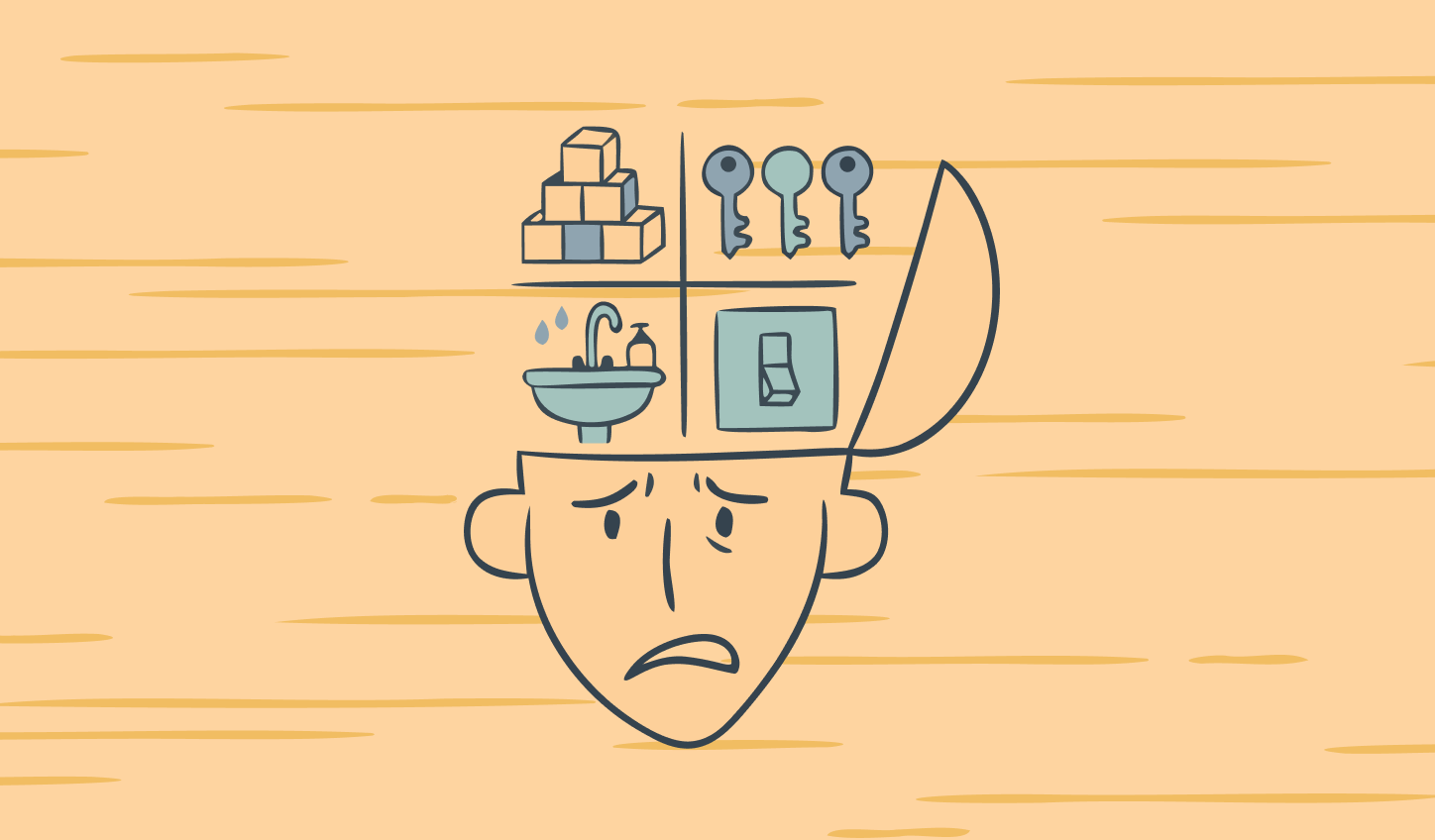
OCD is a condition in which unwanted thoughts, images, or urges, called obsessions, arrive with a sense of emergency, and repetitive behaviors or mental acts, called compulsions, bring a brief and expensive relief. Most people have an odd thought now and then, or double-check a lock before bed. What sets OCD apart is how loud the thought gets, how much time the response takes, and how quickly the relief wears off. The themes vary widely: contamination, harm, things having to feel “just right,” or taboo thoughts that clash with a person’s values. Underneath many of them sits a feeling that is hard to bear, such as dread, disgust, doubt, or guilt, and a ritual that has learned to quiet it.
Dialectical Behavior Therapy (DBT) grew out of Marsha Linehan’s work in the late 1980s and early 1990s, when she was trying to help people with chronic suicidal thoughts and borderline personality disorder who kept dropping out of treatments built entirely around change. Her answer was to hold two things at once: full acceptance of a person’s experience as understandable, and a steady push toward new behavior. That deliberate tension is the dialectic in the name. Over the following decades, clinicians adapted the skills for eating disorders, depression, PTSD, ADHD, and substance use, and for teenagers as well as adults, because the same pattern kept showing up underneath: feelings that arrive fast, hit hard, and pull toward actions that bring quick relief at a long-term cost.
OCD was not part of the original picture, and DBT was not designed for it. Still, the pattern will sound familiar to anyone who lives with the condition. An obsession lands, distress spikes, and a ritual, whether washing, checking, counting, or a silent phrase repeated until it feels right, brings the feeling down. The ritual works as an emotion regulation strategy, a fast one with a steep price. Exposure and response prevention (ERP) goes straight at that loop by helping a person stop ritualizing and find out that the feared outcome does not follow. DBT skills approach from the side: what to do with the surge of feeling while you hold off, how to relate to a frightening thought without arguing with it, and how to talk with family or friends who have been drawn into the cycle.
DBT is organized into four skills modules: Mindfulness, Distress Tolerance, Emotion Regulation, and Interpersonal Effectiveness. In OCD, the usual response to a trigger is to act, whether by washing or by checking. What DBT practices instead is redirection, putting something other than the ritual into the gap between the urge and the action. That’s the redirection each of the following four modules is built to practice:
- Mindfulness gives intrusive thoughts somewhere to be without running the day. OCD fuses a thought with a demand. Mindfulness teaches the skill of noticing a thought, naming it as a thought, and returning to what you were doing, which is a different muscle than trying to push it away.
- Distress tolerance covers the minutes between a trigger and a ritual. When an obsession spikes, the urge to wash or to check can feel like the only way out. This module supplies fast skills for getting through that stretch without ritualizing, and without making the moment worse.
- Emotion regulation addresses the feeling the ritual was built to quiet. Dread, disgust, guilt, a sense that something is incomplete: rituals tend to follow one of these. This module works on naming and easing that feeling directly, along with the shame that often follows an unwanted thought.
- Interpersonal effectiveness changes what happens between you and the people the ritual pulls in. Reassurance questions and quiet workarounds add up in a household. This module gives people concrete ways to ask for what they need, hold a limit kindly, and ask for support without hiding.
OCD rarely shows up as a single, isolated problem, which is part of why these four modules aren’t meant to be worked through strictly one at a time. Skills from different modules can be paired together to shift a behavior in the moment, noticing the urge to check with a mindfulness skill, then working the dread underneath it with an emotion regulation one, rather than treating each module as a separate toolkit reached for on its own. Learn more about skill stacking in the case study below.
DBT vs. Other Treatments for OCD
OCD has a clearer standard of care than most conditions, which changes how DBT should be compared with the alternatives. Exposure and response prevention (ERP) and serotonin reuptake inhibitors (SSRIs) are the established first-line options, while acceptance-based and mindfulness-based therapies sit in between as promising but less proven choices. DBT has the thinnest direct evidence of all, so it is best understood as an add-on for specific difficulties, not a rival to the treatments below.
ERP is the benchmark. A meta-analysis of randomized trials of CBT with ERP found a large effect against all control conditions, but also found that ERP was no more effective than other active psychological therapies, and that results leaned heavily on researcher allegiance. A separate meta-analysis of ERP trials likewise found a definite overall effect without a statistical advantage over other therapies. ERP works by having a person face feared triggers while resisting rituals, which means it already depends on tolerating distress. That is exactly where DBT's distress tolerance skills could help someone who struggles to stay in an exposure or who drops out. DBT does not replace the exposure itself, and no DBT skill substitutes for it.
SSRIs are the other first-line pillar. A dose-response meta-analysis found that higher doses were associated with greater efficacy in OCD, at the cost of more side effects, and a meta-analysis of SSRI response over time found that benefit begins earlier than commonly assumed. A review of study quality in OCD drug trials cautions that methodological flaws may inflate short-term efficacy estimates. Medication targets symptoms biologically, while DBT teaches coping behaviors, so the two address different layers of the problem. The combination with ERP is better supported: a systematic review in Frontiers in Psychiatry found that ERP plus medication outperformed medication alone. In children and adolescents, a Frontiers in Psychiatry review found that adding CBT helped people on SSRI monotherapy who had not fully responded.
Acceptance and Commitment Therapy (ACT) is the closest cousin to DBT, since both emphasize acceptance and psychological flexibility. In a randomized trial of 79 adults, eight ACT sessions produced larger OCD symptom reductions than progressive relaxation. A smaller randomized comparison of ACT, SSRIs, and their combination found that ACT and the combined treatment beat SSRIs alone, though only 27 patients completed the study. Unlike DBT, ACT has controlled trials specific to OCD, which makes it the better-supported choice when the goal is an acceptance-based approach.
Mindfulness-based approaches, including mindfulness-based cognitive therapy (MBCT), overlap with DBT's first skill module. A meta-analysis of MBCT for OCD reported a significant reduction in symptoms compared with control groups, and a meta-analysis of mindfulness-based psychotherapy described the results as promising, both as an alternative and as a complement to traditional treatments. A meta-analysis of randomized trials tempers this: mindfulness interventions produced small reductions in obsessions that were not sustained at follow-up, with ACT and MBCT looking most effective. Taken together, this suggests DBT's mindfulness skills may help, but the effects are modest and the evidence comes mostly from other programs, not DBT itself.
None of this makes DBT the wrong choice, but it does make it a supporting one. A sensible sequence for someone with OCD is ERP, an SSRI, or both, with DBT skills layered in when emotional dysregulation, intense distress, or co-occurring problems such as borderline personality traits get in the way of treatment. Used that way, DBT supports the first-line treatments instead of competing with them, and any use of it for OCD should be considered adjunctive until controlled trials are published.


Psychoeducation as a Starting Point for OCD
Most people who live with a phobia already know what it is. They learned the word from a relative or a late-night search, and they can often describe the fear better than a textbook can. What they tend to lack is a structured way to test what they understand against daily life, and a next step smaller than "just face it." Psychoeducation fills that gap by explaining how fear and avoidance work, showing how each skill applies, and giving people room to practice.
Understanding a fear and having something to do when it fires are different things, and skills use is where change seems to happen. A secondary analysis of three randomized trials in borderline personality disorder followed 108 women through a year of treatment. People in DBT increased their use of skills more than people in comparison treatments, and that increase statistically accounted for their drops in suicide attempts and depression. The study was not about phobias, and participants reported their skills use from memory, so it points to a plausible mechanism and does not prove the same will hold for fear.
Many people also wonder whether skills training only works alongside individual treatment. A real-world comparison of a standalone DBT skills group with standard DBT, in adults with borderline personality disorder who chose their own group, found no meaningful differences in borderline symptoms or suicidal thoughts among those who finished. Dropout was higher in the skills group, about 38 percent against 17 percent, and people were not randomly assigned, so the result is preliminary.
TheraHive teaches the four modules in group-based sessions where people practice together. The sessions are psychoeducational: they are not psychotherapy, and they are not a diagnosis or a treatment for any condition. They are meant to complement exposure-based care from a licensed clinician, not replace it. Practicing in front of a friendly audience, as in a DBT skills group for anxiety, can be a small step toward what feels frightening, and for people whose fear makes leaving the house hard, learning from home puts that practice within reach.
Mindfulness Skills for OCD
OCD turns a thought into an emergency. "What if I hurt someone" stops being a passing sentence and becomes a threat that demands a response. DBT mindfulness trains a different relationship with that moment, one where a thought is something you notice and name, then leave alone, instead of a problem you have to solve before you can move on.
Picture someone on the train to work who suddenly wonders whether the iron is still on. The old response is to replay the morning in detail and then check a smart plug or text a roommate. The practice starts with Describe, which means putting what is happening into plain words: "I'm having the thought that the iron is on, and I feel a pull to check." Next comes Participate, which means returning full attention to the book in your hands or the walk from the station and letting the doubt ride along unanswered. The doubt may last the entire trip. The skill lies in not letting it steer.
Mindfulness comes with one caution in OCD since any skill practiced anxiously can turn into a ritual. The Observe skill can slide into inspecting, and asking "Am I still anxious? Has the urge faded yet?" is simply checking by another name. Descriptions work best when they are short and flat, with no detective work about why the thought showed up. Anyone practicing mindfulness alongside exposure and response prevention (ERP) should tell their clinician exactly how they are using it so that a helpful skill does not become a mental ritual.
The Nonjudgmentally skill matters most for people with violent or sexual obsessions, or religious and moral ones. Thoughts like these are common in OCD and are unwanted by definition, yet they often arrive with a second layer of shame: what kind of person thinks this? A nonjudgmental stance helps separate having a thought from endorsing it, so someone can say "my brain produced a horrible image" without concluding that they are horrible. Convincing yourself that the thought is harmless is not the aim, since that kind of self-reassurance can become a ritual too.
Try one of our brief and calming mindfulness exercises below. For more free mindfulness exercises, visit our YouTube playlist.


Distress Tolerance Skills for OCD
Distress tolerance speaks most directly to the stretch between a trigger and a ritual, those minutes when the urge feels as if it can only end one way. DBT distress tolerance skills are crisis survival skills, meant to help you get through intense feelings without doing something that makes things worse. In OCD, "worse" includes the ritual that strengthens the cycle.
STOP gives a first step. You Stop, Take a step back, Observe what is happening inside and around you, and Proceed mindfully. Someone who just touched a gas pump handle and feels the urge to scrub for five minutes might use STOP to freeze in place, notice the tightness in the chest and the thought "my hands are dirty," and then carry on with the errand instead of letting the urge make the call. Urge surfing extends that pause. The urge swells and then fades like a wave, and the task is to watch it crest without feeding it. Radical Acceptance takes on the hardest fact in OCD, that an unwanted thought cannot be deleted on command and that certainty is not on offer. Pros and Cons keeps the long view in sight by setting the minutes of relief a ritual brings beside the hours it costs.
When panic or physical arousal climbs so high that no skill can be used, TIPP works on the body directly, through cold water on the face, brief intense exercise, paced breathing, and paired muscle relaxation. In OCD it is a way to bring a flooded moment back into workable range. It is not something to reach for after every obsession because a calming routine that is needed each time a trigger appears becomes a safety behavior of its own. The cold water and intense exercise steps carry medical cautions, so anyone with a heart condition or who takes a beta-blocker should check with a health care provider first.
The same logic applies to distraction and self-soothing. Used to stay engaged in life while resisting a ritual, they can help. Used to push a thought away during an exposure exercise, such as putting on music every time you touch a doorknob to take the edge off the anxiety, they act as a neutralizing ritual and undercut what the exposure is for. A clinician trained in ERP can help sort out which is which.
Emotion Regulation Skills for OCD
Beneath many rituals sits a feeling that is hard to name, such as fear or disgust. Emotion regulation skills start with observing, describing, and naming emotions, which means slowing down enough to say what is actually there. Is the pull to retie a shoelace fear of something terrible, or a "not just right" itch with no story attached? Is the urge to wash driven by disgust, or by guilt about a thought? The answers point toward different responses, and a labeled feeling is easier to carry than a vague wave of dread.
Mapping the sequence helps too. A trigger leads to a thought, a feeling, an urge, and a ritual, and laid out on paper that chain shows where a different choice is possible. A simple worksheet can hold the map, and the Breaking the Cycle mini course teaches chain analysis step by step for people who want guided practice. Keeping the map brief and filling it in after the moment has passed matters since replaying an episode in detail while still anxious can turn into mental review.
Opposite Action speaks to what people tend to do once shame or fear shows up. Shame says hide, and fear says avoid. Acting against that urge, when the emotion does not fit the facts or acting on it would not help, might mean a new parent finally telling a clinician who understands OCD about intrusive images of dropping the baby that they have kept secret for months, or staying in a conversation instead of slipping away to perform a ritual. Done with guidance, it complements exposure work rather than replacing it.
One caution applies. Check the Facts, a skill that weighs an emotion against the evidence, can turn into a debate over whether the feared event will happen, and arguing with an obsession easily becomes a mental ritual. It is worth raising with your clinician before using it on OCD-related fears.
For a deep dive on opposite action and other emotion regulation skills, check out the Thriving With DBT podcast episode below where TheraHive co-founder Dr. Alicia Smart walks through the skills in real-time with a real TheraHive student.


Interpersonal Effectiveness Skills for OCD
OCD rarely stays inside one person. A partner answers "Are you sure the door is locked?" for the fifteenth time that evening. A parent buys a fourth bottle of hand soap. Clinicians call this family accommodation, and it usually comes from love since giving the answer ends the distress right now. The trouble is that the relief tends to bring the question back sooner. DBT interpersonal effectiveness skills give both sides language for changing the pattern without turning it into a fight.
DEAR MAN is the skill most often used for this conversation. Someone with OCD might say, "I've noticed I ask you whether the stove is off almost every night (Describe). I feel stuck, and I don't want to keep doing it (Express). When I ask, I'd like you to say, 'I know this is hard, and I'm not going to answer that one' (Assert). It will help me break this habit, and we'll both get our evenings back (Reinforce)." The last steps keep the conversation on the request. Staying Mindful of the goal means not getting pulled back into whether the stove is actually off, and being willing to Negotiate leaves room to adjust the plan together. This works best as a plan agreed on ahead of time, ideally with the person's ERP clinician, and not as a sudden withdrawal of help in the middle of a hard night.
Loved ones can use DEAR MAN too, to ask for what they need, such as dinner that does not wait on a ritual. GIVE (Gentle, Interested, Validate, Easy manner) keeps warmth in the exchange while the answer changes, which matters because many families fear that declining to reassure is unkind. FAST (Fair, no extra Apologies, Stick to values, Truthful) helps hold a limit while keeping self-respect intact. People who have hidden their rituals for years can also use these skills to ask for support instead of withdrawing, since hiding symptoms out of shame is common in OCD.
Research on DBT for OCD
DBT for OCD is promising in theory and thin in direct evidence. ERP remains the first-line psychological treatment, a position laid out in a review of ERP research and practice, and no trial has shown DBT skills to be equal to it. What exists is a small set of early studies and a stronger body of work on the processes DBT targets.
One small controlled study, a quasi-experimental trial of DBT skills in women with OCD, gave 15 women eight 90-minute sessions and compared them with 15 women who received nothing. The skills group showed lower OCD symptom scores and better cognitive emotion regulation afterward. With so few participants and a comparison group that received no treatment instead of ERP, it is best read as a reason to keep looking and not as proof.
A newer trial may help fill the gap. A study protocol for a randomized trial of DBT distress tolerance techniques in adults with OCD describes a 12-week program for 60 adults aged 18 to 40 who score 16 or higher on the Yale-Brown Obsessive Compulsive Scale, with standard ERP as the comparison. A protocol is a plan and not a result, so no outcomes are available yet.
A pilot trial of DBT skills training for emotion dysregulation in anxious or depressed adults did not target OCD, but it speaks to whether skills taught on their own can help. Forty-four adults with high emotion dysregulation, none of whom had borderline personality disorder, were randomized to 16 weeks of skills training or an activities-based support group. Skills training did better on emotion dysregulation (d = 1.86) and anxiety (d = 1.37) but not on depression, and the authors called for more work on feasibility.
The stronger reason for interest is mechanism. A study comparing 80 outpatients with OCD to 80 healthy controls found that the OCD group struggled more with emotional clarity, with reaching regulation strategies, and with accepting their own emotional responses. Non-acceptance in particular predicted checking and doubting, mental neutralizing, and ordering. On the distress tolerance side, a study of 116 people in an intensive ERP program found that distress tolerance and self-efficacy, meaning confidence in coping, both grew as symptoms fell, and each helped explain how the other related to symptom improvement. That points to distress tolerance already being part of how ERP works, which is the logic for adding the skills, though it does not show that DBT adds benefit.
On the relationship side, a meta-analysis of 41 studies found a moderate link between family accommodation and OCD severity (r = .42), and a correlation like that cannot show which comes first. A 2025 pooled analysis of how often accommodation occurs found it in over 90 percent of OCD cases, most often as reassurance and waiting for rituals to finish, but found no significant link to severity or treatment outcome. The findings are mixed, and they speak more to how common the pattern is than to any particular way of changing it.
For now, the evidence suggests DBT skills may ease emotional overwhelm and support ERP, though large trials of the skills alongside or against ERP are still needed. Anyone considering these skills for OCD should treat them as a supplement to ERP and watch for any skill that starts to work as a ritual.
Taking the First Step
DBT skills are a companion to OCD treatment, not a replacement for it. A good place to start is the moment you already know best, the pause between the thought and the check, and to practice there: a mindfulness exercise, one distress tolerance skill, a script for asking for less reassurance. Learning virtually can mean practicing in the same rooms where the urges tend to show up. TheraHive’s online DBT skills program is psychoeducational, and it does not diagnose OCD or stand in for ERP, medication, or the clinician guiding them.
If the pause before the ritual, or the reassurance question you wish you could stop asking, sounds like where you’d like support, TheraHive’s online DBT Skills Groups teach all four modules with a trained facilitator and a small group of peers, as a complement to your ERP work. If a lower-stakes first step appeals, the free Navigating DBT Mini Course introduces the same four modules at your own pace.
Frequently Asked Questions
Can DBT help with OCD?
Yes. DBT can help people with OCD manage the emotional distress, anxiety, and urges that often accompany obsessive thoughts and compulsive behaviors. Its four core modules, mindfulness, distress tolerance, emotion regulation, and interpersonal effectiveness, teach practical ways to respond to difficult internal experiences without automatically reacting to them.
DBT is most useful as a complement to evidence-based OCD treatment, particularly Exposure and Response Prevention (ERP), rather than a replacement for it.
Is DBT or CBT better for OCD?
CBT with Exposure and Response Prevention (ERP) is the first-line psychological treatment for OCD and has a stronger research foundation than DBT for directly reducing OCD symptoms. ERP helps people gradually face situations, thoughts, and feelings that trigger obsessions while learning to resist the urge to perform compulsions.
DBT serves a different but complementary purpose. It teaches skills for tolerating distress, regulating emotions, and managing the discomfort that can arise during treatment. For some people, combining DBT skills with ERP may make it easier to stay engaged in treatment and practice new behaviors consistently.
How does DBT help with obsessive thoughts and compulsive behaviors?
DBT teaches people to recognize thoughts, emotions, and urges without automatically acting on them. For someone with OCD, this can be particularly helpful when an intrusive thought triggers an overwhelming need to check, seek reassurance, repeat an action, or mentally review an event.
Mindfulness helps people notice these experiences without immediately responding. Distress tolerance teaches them to sit with the discomfort that comes from resisting a compulsion, while emotion regulation provides tools for managing the anxiety and frustration that may follow.
These skills can support the response prevention component of ERP, helping people practice a different response even when the urge to perform a compulsion feels strong.
Can DBT help with OCD-related anxiety and uncertainty?
Yes. Many people with OCD struggle with uncertainty and the discomfort of not knowing whether something is safe, correct, or completely resolved. This can lead to repeated checking, reassurance-seeking, and attempts to achieve a feeling of certainty.
DBT's distress tolerance and mindfulness skills can help people recognize uncertainty without immediately trying to eliminate it. Radical acceptance, for example, teaches people to acknowledge what they cannot control or know for certain without treating that uncertainty as something they must fix.
The goal is not to eliminate anxiety or guarantee that everything will be okay. It is to develop the ability to move forward even when uncomfortable feelings and unanswered questions remain.
Can DBT help with OCD if my compulsions are mostly mental?
Yes. OCD compulsions are not always visible. Some people engage in mental rituals such as silently repeating phrases, reviewing memories, analyzing their thoughts, praying repeatedly to neutralize a fear, or trying to convince themselves that something bad will not happen.
DBT mindfulness skills can help people become more aware of these internal patterns and recognize when they are getting pulled into repetitive thinking. Distress tolerance can also help them resist the urge to mentally resolve every doubt or uncomfortable thought.
However, mental compulsions require specific attention in OCD treatment. ERP can be adapted to address mental rituals and other forms of covert compulsions, not just observable behaviors.
Can I participate in a DBT skills group if I have OCD?
Yes. People with OCD can benefit from learning DBT skills in a structured group setting, particularly when they also experience emotional overwhelm, difficulty tolerating distress, or challenges managing relationships.
A DBT skills group provides opportunities to learn and practice mindfulness, emotion regulation, distress tolerance, and interpersonal effectiveness alongside others. These skills can complement individual OCD treatment and help participants apply what they are learning to everyday situations.
Group-based DBT skills training is psychoeducational rather than a substitute for individualized OCD treatment. If you are receiving ERP or other mental health care, a DBT skills group can be one part of a broader treatment plan.
Can DBT cure OCD?
DBT is not a cure for OCD, and it has not been established as a stand-alone treatment for the condition. However, learning DBT skills may help people manage the distress associated with OCD and develop healthier ways of responding to intrusive thoughts and compulsive urges.
OCD treatment often involves a combination of approaches, depending on symptom severity, individual needs, and treatment history. CBT with ERP remains the best-established psychological treatment, and medication may also be appropriate for some people.
The goal is not necessarily to stop every intrusive thought from occurring. It is to reduce the influence OCD has over daily decisions, behaviors, relationships, and quality of life.
References
References
Başkaya, E., Özgüç, S., & Tanrıverdi, D. (2021). Examination of the Effectiveness of Mindfulness-Based Cognitive Therapy on Patients With Obsessive-Compulsive Disorder: Systematic Review and Meta-Analysis. Issues in Mental Health Nursing
Bloch, M. H., McGuire, J., Landeros-Weisenberger, A., Leckman, J. F., & Pittenger, C. (2010). Meta-Analysis of the Dose-Response Relationship of SSRI in Obsessive-Compulsive Disorder. Molecular Psychiatry
Cohen, S. E., Zantvoord, J. B., Storosum, B. W. C., Mattila, T. K., Daams, J., Wezenberg, B., de Boer, A., & Denys, D. A. J. P. (2024). Influence of Study Characteristics, Methodological Rigour and Publication Bias on Efficacy of Pharmacotherapy in Obsessive-Compulsive Disorder: A Systematic Review and Meta-Analysis of Randomised, Placebo-Controlled Trials. BMJ Mental Health
Do, H. S., Lee, J., Yu, H., Lee, C. W., Hur, H. J., Lim, J., Kang, H. S., Park, J., Ha, T. H., & Myung, W. (2025). Relationship Between Emotion Regulation Skills, Resilience, Depression and Anxiety Symptom Severity in Patients With Mood Disorders and Non-Clinical Participants: A Mediation Model. European Archives of Psychiatry and Clinical Neuroscience
Hashemi, M., et al. (2016). Efficacy of Dialectical Behavior Therapy on Clinical Signs and Emotion Regulation in Patients With Obsessive-Compulsive Disorder. Mediterranean Journal of Social Sciences
Hezel, D. M., & Simpson, H. B. (2019). Exposure and Response Prevention for Obsessive-Compulsive Disorder: A Review and New Directions. Indian Journal of Psychiatry
Hermida-Barros, L., Primé-Tous, M., García-Delgar, B., Forcadell, E., Lera-Miguel, S., Fernández de la Cruz, L., Vieta, E., Radua, J., Lázaro, L., & Fullana, M. A. (2024). Family Accommodation in Obsessive-Compulsive Disorder: An Updated Systematic Review and Meta-Analysis. Neuroscience & Biobehavioral Reviews
Issari, Y., Jakubovski, E., Bartley, C. A., Pittenger, C., & Bloch, M. H. (2016). Early Onset of Response With Selective Serotonin Reuptake Inhibitors in Obsessive-Compulsive Disorder: A Meta-Analysis. Journal of Clinical Psychiatry
Kotapati, V. P., Khan, A. M., Dar, S., Begum, G., Bachu, R., Adnan, M., Zubair, A., & Ahmed, R. Z. (2019). The Effectiveness of Selective Serotonin Reuptake Inhibitors for Treatment of Obsessive-Compulsive Disorder in Adolescents and Children: A Systematic Review and Meta-Analysis. Frontiers in Psychiatry
Mao, L., Hu, M., Luo, L., Wu, Y., Lu, Z., & Zou, J. (2022). The Effectiveness of Exposure and Response Prevention Combined With Pharmacotherapy for Obsessive-Compulsive Disorder: A Systematic Review and Meta-Analysis. Frontiers in Psychiatry
Neacsiu, A. D., Eberle, J. W., Kramer, R., Wiesmann, T., & Linehan, M. M. (2014). Dialectical Behavior Therapy Skills for Transdiagnostic Emotion Dysregulation: A Pilot Randomized Controlled Trial. Behaviour Research and Therapy
Song, Y., Li, D., Zhang, S., Jin, Z., Zhen, Y., Su, Y., Zhang, M., Lu, L., Xue, X., Luo, J., Liang, M., & Li, X. (2022). The Effect of Exposure and Response Prevention Therapy on Obsessive-Compulsive Disorder: A Systematic Review and Meta-Analysis. Psychiatry Research
Twohig, M. P., Hayes, S. C., Plumb, J. C., Pruitt, L. D., Collins, A. B., Hazlett-Stevens, H., & Woidneck, M. R. (2010). A Randomized Clinical Trial of Acceptance and Commitment Therapy vs. Progressive Relaxation Training for Obsessive Compulsive Disorder. Journal of Consulting and Clinical Psychology
Vakili, Y., Gharaee, B., & Habibi, M. (2015). Acceptance and Commitment Therapy, Selective Serotonin Reuptake Inhibitors and Their Combination in the Improvement of Obsessive-Compulsive Symptoms and Experiential Avoidance in Patients With Obsessive-Compulsive Disorder. Iranian Journal of Psychiatry and Behavioral Sciences
Wechsler, T. F., Kümpers, F., & Mühlberger, A. (2019). Inferiority or Even Superiority of Virtual Reality Exposure Therapy in Phobias? A Systematic Review and Quantitative Meta-Analysis on Randomized Controlled Trials Specifically Comparing the Efficacy of Virtual Reality Exposure to Gold Standard In Vivo Exposure in Agoraphobia, Specific Phobia, and Social Phobia. Frontiers in Psychology
Wu, M. S., McGuire, J. F., Martino, C., Phares, V., Selles, R. R., & Storch, E. A. (2016). A Meta-Analysis of Family Accommodation and OCD Symptom Severity. Clinical Psychology Review
Xu, J., Falkenstein, M. J., & Kuckertz, J. M. (2024). Feeling More Confident to Encounter Negative Emotions: The Mediating Role of Distress Tolerance on the Relationship Between Self-Efficacy and Outcomes of Exposure and Response Prevention for OCD. Journal of Affective Disorders
Related Reading