DBT for Seasonal Affective Disorder (SAD)

When your mood changes with the seasons, even ordinary parts of daily life can become harder to manage. Seasonal Affective Disorder (SAD) is more than the winter blues; it is a recurring form of depression that can affect how you feel and function during certain times of the year. Alongside established approaches like bright light therapy and cognitive-behavioral therapy, Dialectical Behavior Therapy (DBT) offers practical skills for navigating emotional difficulties and maintaining routines. Explore how DBT's four modules relate to SAD, how they fit alongside other treatments, and what the research says about their effectiveness.

Overview of DBT for Seasonal Affective Disorder
Marsha Linehan developed Dialectical Behavior Therapy (DBT) to help people whose emotions felt too intense to manage and whose lives were painful as a result. Its central idea is a dialectic: you can accept yourself exactly as you are and still work to change. Over the decades, DBT has been adapted for anxiety, depression, eating concerns, substance use, and many other struggles in which strong emotions drive unhelpful behavior. Its skills training component is now taught on its own, in groups, to people who simply want better tools for hard moments.
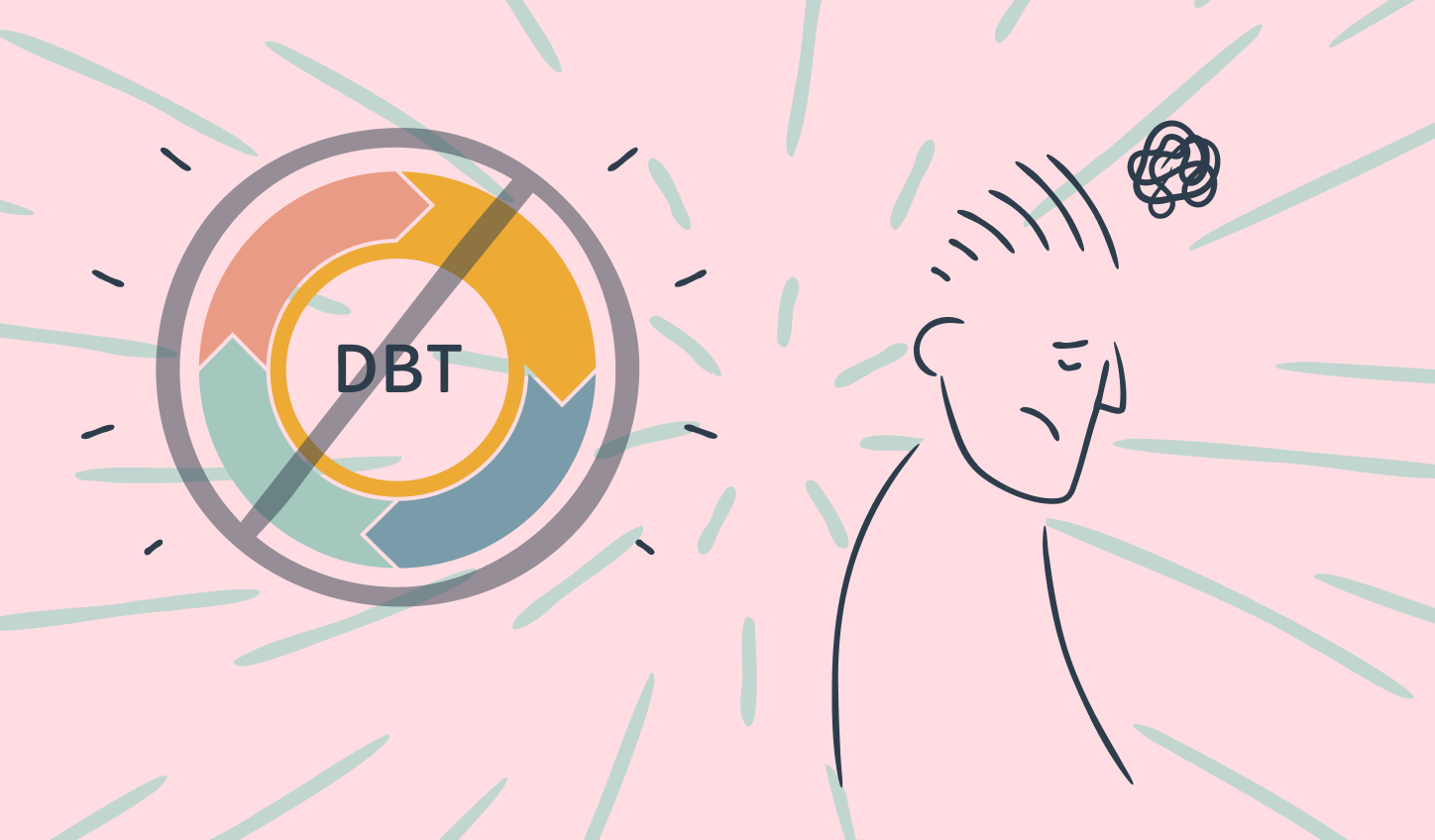
SAD is a different kind of problem than the ones DBT was built for. It is a pattern of recurrent depression with a seasonal rhythm, and light exposure and body clock biology appear to play a part. DBT skills do not target either of those. What they can address is everything that grows around the season: the story the mind tells about winter, the pull to cancel plans and stay under the covers, and the way a low mood strains the people closest to us.
DBT skills training is organized into four modules, and each one connects to a different part of the winter experience:
- Mindfulness helps you notice a thought like "this whole season is ruined" as a thought, which creates a little room before it hardens into a conclusion. It also helps you catch an early dip in mood in October instead of in January.
- Distress Tolerance offers ways to get through a hard moment, such as dread on the first dark evening or a heavy holiday gathering, without making it worse by oversleeping all weekend or giving up on plans.
- Emotion Regulation targets the withdrawal and low motivation that often come with winter. It teaches you to test whether a hopeless prediction fits the facts and to act against the urge to hibernate.
- Interpersonal Effectiveness supports the conversations winter makes harder, like asking a partner for help with an evening routine or turning down an event when energy is low without losing the friendship
Real winter days rarely call for one skill at a time. A low-energy Sunday afternoon might involve a heavy thought, a sinking mood, a physical urge to stay in bed, and a message from a friend you have been avoiding. Skill stacking means pairing skills from different modules so they work together. You might notice the thought with mindfulness, check whether it fits the facts, act opposite to the urge to isolate, and ask a friend to join you with a DEAR MAN request. Each skill covers something the others do not, which is why a stack can feel more workable than any single tool. Learn more about skill stacking in the case study below.
DBT vs. Other Treatments for Seasonal Affective Disorder
Seasonal affective disorder has a well-studied set of treatments, and DBT is not among them. Bright light therapy is the most established approach for an acute winter episode, and it works on the body clock, not on thoughts or habits. Cognitive-behavioral therapy for SAD (CBT-SAD) is a time-limited psychotherapy delivered by a clinician. It uses cognitive restructuring and behavioral activation to change how people respond to winter. Antidepressant medication is another option that a prescriber can discuss with you, and some people use more than one approach at once.
DBT skills overlap with CBT-SAD in useful ways. Checking the facts resembles cognitive restructuring, and acting opposite to a withdrawal urge resembles behavioral activation. Where DBT differs is its emphasis on acceptance next to change. Mindfulness and radical acceptance give you a way to stay with a hard season without fighting it, and that is a different stance than trying to correct every gloomy thought.
The differences that matter most are about scope. Light therapy and CBT-SAD have been tested directly in people with SAD, and DBT skills training has not. TheraHive's skills groups are psychoeducational, which means they teach and rehearse skills and do not diagnose or treat SAD. If you have received a SAD diagnosis, or you suspect that your winter low mood is more than a rough patch, a doctor or licensed clinician is the right person to help you choose among the established options. DBT skills can then be added as practical support.


Psychoeducation as a Starting Point for Seasonal Affective Disorder
Psychoeducation is structured learning about how emotions, thoughts, and behaviors work, along with practical skills for responding to them. It differs from psychotherapy, which is individualized clinical care, usually provided by a licensed professional, that assesses a person's specific situation and treats it. Psychoeducation is more like a class. You learn a framework, you practice with examples, and you decide what fits your own life.
For SAD, that framework can be quietly reassuring. Learning that a seasonal pattern of low mood is a recognized, common experience, and not a personal failing or a lack of willpower, tends to lower the shame that makes people hide it. Learning to spot your own early signs, such as sleeping more or pulling away from people, gives you something to act on before a hard stretch settles in. Wanting your thoughts to stop is not the goal. The goal is a different relationship with them.
Insight alone rarely changes what we do at 5 p.m. on a dark Tuesday. Behavior shifts when a skill has been learned, practiced when things are calm, and then tried in the moment. Research on group-based skills training, described in the Research section below, points in the same direction, and it is also why practice and feedback matter more than reading about a skill once.
TheraHive's approach is live, group-based skills training, and it is psychoeducational. It is not psychotherapy and it is not treatment for SAD. What it offers is a place to learn skills and rehearse them with a coach and other members, and that can complement light therapy, medication, individual care, or other supports without replacing any of them. Because groups meet online, learning from your own living room can also be a practical fit when winter makes leaving the house feel like a lot.
If you are having thoughts of harming yourself, please contact a crisis line such as 988 in the United States or reach out to a clinician right away.
Mindfulness Skills for Seasonal Affective Disorder
Mindfulness in DBT means paying attention to the present moment on purpose and without judgment. The Observe and Describe skills ask you to notice what is happening inside and around you and to put it into plain words. Wise Mind is the place where emotion and reason both get a say.
These skills matter in SAD because winter tends to bring sweeping thoughts and a lot of replaying. A gray morning becomes "the whole season is going to be like this," and last year's hardest weeks resurface on a loop. Mindfulness does not argue with those thoughts. It lets you see them as thoughts.
Picture waking at 6:30 on a Monday with the thought "I can't do this again this winter." Using Observe and Describe, you might say to yourself, "I'm noticing the thought that I can't do this, and my body feels heavy." That small shift can interrupt the spiral enough to ask what you need next. People who use DBT mindfulness exercises also tend to become better at noticing the first signs of a seasonal dip, which is when the other skills are easiest to use.
Try one of our brief and calming mindfulness exercises below. For more free mindfulness exercises, visit our YouTube playlist.


Distress Tolerance Skills for Seasonal Affective Disorder
Distress tolerance skills are for getting through painful moments without adding fuel. They are not meant to fix winter or erase sadness. They aim to keep a hard hour from turning into a hard week.
The TIPP skill uses the body to lower intensity quickly through changes in temperature, brief intense movement, paced breathing, and paired muscle relaxation. Radical Acceptance means acknowledging reality as it is, without approving of it. Those who practice DBT distress tolerance techniques often find that the second one changes the most over time.
Consider the first truly dark evening of the year, when dread arrives all at once. Paced breathing for a few minutes can bring the intensity down enough to think. From there, radical acceptance might sound like, "It gets dark early now, and I wish it didn't. Fighting that fact is making the evening worse." Accepting the darkness does not mean giving up. It frees up energy for the plan you actually want to follow, such as turning on the lamps and texting someone.
Emotion Regulation Skills for Seasonal Affective Disorder
Emotion regulation skills help you understand your emotions and influence how they play out. For SAD, they target the withdrawal, low motivation, and hopeless predictions that can crowd the season. These DBT emotional regulation skills are probably the closest match to what CBT-SAD teaches, with an added emphasis on self-compassion.
Check the Facts asks whether an emotion and its intensity fit the situation. Opposite Action means acting against an urge when the urge does not serve you, such as isolating when you are low. Accumulate Positive Emotions builds small pleasant experiences into the week, and Cope Ahead prepares you for situations you can predict.
Suppose a friend invites you to dinner and every part of you wants to cancel. Check the Facts: has staying home on past dark evenings made you feel better afterward? If the honest answer is no, Opposite Action might mean going for an hour, with an easy exit plan. Cope Ahead can work well in early fall, before symptoms begin, by scheduling weekly plans and a daily daylight walk while motivation is still available.


Interpersonal Effectiveness Skills for Seasonal Affective Disorder
Seasonal depression often changes how people relate to others. Irritability goes up, energy for socializing goes down, and loved ones may not know what is happening. Interpersonal effectiveness skills help you ask for what you need and set limits while protecting the relationship.
DEAR MAN is a script for making a clear request. GIVE keeps the relationship warm while you do it, and FAST helps you keep your self-respect when you need to say no. With DBT interpersonal effectiveness practice, these become easier to reach for under stress.
Imagine asking a partner for help with the evening routine. Using DEAR MAN, you describe the situation ("The apartment gets dark by five and my mood drops"), express how you feel, assert a specific request ("Could we turn on the lamps and take a short walk together after work?"), and reinforce the benefit. The same approach works for telling a friend that you need a quiet weekend. Winter is a season when many people withdraw without explaining, and a clear sentence can keep others close.
For a deep dive on DEAR MAN and other interpersonal effectiveness skills, check out the Thriving With DBT podcast episode below where TheraHive co-founder Dr. Alicia Smart walks through the skills in real-time with a real TheraHive student.
Research on DBT for Seasonal Affective Disorder
The most important finding is an absence. To our knowledge, no randomized trials have tested DBT skills training specifically in people with seasonal affective disorder. Everything in this page that connects DBT to SAD is a reasoned extension of research in other groups, and it should be read that way.
What is known about SAD itself is substantial. A 2025 meta-analysis of SAD prevalence by latitude estimated that about 5% of people screened met criteria for SAD and found that rates rose at higher latitudes. Those studies relied on a screening questionnaire, so the figures are estimates and not clinical diagnoses. Among treatments, a randomized trial of 177 adults found that six weeks of CBT-SAD and six weeks of light therapy were comparably effective for an acute episode. In the follow-up of the same participants, about 27 percent of those who had CBT-SAD had a recurrence two winters later, compared with about 46 percent of those who had light therapy.
Research on DBT skills in related conditions offers indirect support. A pilot randomized trial in 34 older adults with depression found that adding a DBT skills group and phone coaching to antidepressant medication was associated with higher remission rates than medication alone. The sample was small, the participants were not selected for seasonal depression, and the program included clinical components beyond skills training. In a randomized trial of 44 adults with anxiety, depression, or both, a 16-week skills training group reduced emotion dysregulation and anxiety more than an activities-based support group, and the change in depressive symptoms was not significantly different. A study of a DBT skills group in a mixed outpatient sample linked training in the separate modules to independent and additive gains in emotion regulation.
Taken together, these studies suggest that DBT skills may help with emotion regulation, but they do not show that DBT improves SAD. Larger, SAD-specific trials would be needed to say more.
Taking the First Step
If the early dark brings heavy thoughts, withdrawal from friends, or arguments at home, Adult DBT Skills Groups give you a place to rehearse skills like Check the Facts and Opposite Action with a live coach and other members, alongside whatever light therapy or clinical care you already use.
If you would like to try the basics first, the free Navigating DBT Mini Course is a low-pressure place to begin.
Frequently Asked Questions
Is DBT used for seasonal affective disorder?
DBT skills are sometimes used alongside established SAD care, but DBT has not been tested in randomized trials for SAD. Light therapy and cognitive-behavioral therapy for SAD have the strongest direct evidence. DBT skills training can add practical tools for thoughts, habits, and relationships during winter.
Can DBT skills replace light therapy or medication for SAD?
No. DBT skills training is not a substitute for light therapy, SAD-specific cognitive-behavioral therapy, or medication prescribed by a clinician. TheraHive's skills groups are psychoeducational, so they can complement those options and not replace them.
What is the difference between the winter blues and seasonal affective disorder?
Many people notice lower energy and mood in winter. SAD is a recurring pattern of major depression with a seasonal timing, and it causes significant distress or disruption in daily life. Only a licensed clinician can tell the two apart, so it is worth seeking an evaluation if your winters keep getting harder.
How can mindfulness help with winter low mood?
Mindfulness teaches you to notice thoughts and feelings without judging or acting on them automatically. In winter, that can mean seeing "this season is ruined" as a thought and catching early shifts in sleep, appetite, or motivation. It does not remove low mood, but it can create space to respond skillfully.
Which DBT skills help with low energy and social withdrawal?
Opposite Action, Accumulate Positive Emotions, and Check the Facts are commonly used for withdrawal and hopeless predictions. DEAR MAN helps when you need support from other people. Starting with a very small step, such as a ten-minute walk or one text, tends to be more workable than a big plan.
Are DBT skills useful for rumination and repetitive negative thoughts in winter?
They can be. Observe and Describe help you step back from repetitive thoughts, and Check the Facts tests whether they fit reality. Wise Mind and Radical Acceptance support you in letting a thought be there without following it. Skills do not guarantee that unwanted thoughts will stop, but they can change how much those thoughts run your day.
Is a DBT skills group the same as psychotherapy?
No. A DBT skills group is psychoeducational. It teaches and rehearses practical skills, while psychotherapy involves individualized assessment and treatment by a licensed clinician. TheraHive does not provide diagnosis or treatment, and its groups can be used alongside therapy or other care.
Can I join a DBT skills group online if I have seasonal affective disorder?
Yes, many people take part in an online DBT skills group while also using light therapy, medication, or individual care. Online learning can be especially convenient when low energy or dark evenings make going out harder. It is a good idea to tell your clinician what you are practicing.
Can DBT skills help prevent winter depression from coming back?
Direct evidence is limited. DBT has not been studied for SAD recurrence, though a SAD-specific form of cognitive-behavioral therapy has shown lasting benefits in research. Skills such as Cope Ahead can help you prepare in early fall, but they work best as part of a prevention plan made with a clinician.
References
Heath, N., Midkiff, M. F., Gerhart, J., & Goldsmith Turow, R. (2021). Group-Based DBT Skills Training Modules Are Linked to Independent and Additive Improvements in motion Regulation in a Heterogeneous Outpatient Sample. Psychotherapy Research
Rohan, K. J., Meyerhoff, J., Ho, S.-Y., Evans, M., Postolache, T. T., & Vacek, P. M. (2016). Outcomes One and Two Winters Following Cognitive-Behavioral Therapy or Light Therapy for Seasonal Affective Disorder. American Journal of Psychiatry
Kim, K., Kim, J., Jung, S., Kim, H.-W., Kim, H.-S., Son, E., Ko, D. S., Yoon, S., Kim, B. S., Kim, W. K., Lim, C., Kim, K., Lee, D., & Kim, Y. H. (2025). Global Prevalence of Seasonal Affective Disorder by Latitude: A Systematic Review and Meta-Analysis. Journal of Affective Disorders
Rohan, K. J., Mahon, J. N., Evans, M., Ho, S.-Y., Meyerhoff, J., Postolache, T. T., & Vacek, P. M. (2015). Randomized Trial of Cognitive-Behavioral Therapy Versus Light Therapy for Seasonal Affective Disorder: Acute Outcomes. American Journal of Psychiatry
Lynch, T. R., Morse, J. Q., Mendelson, T., & Robins, C. J. (2003). Dialectical Behavior Therapy for Depressed Older Adults: A Randomized Pilot Study. American Journal of Geriatric Psychiatry
Neacsiu, A. D., Eberle, J. W., Kramer, R., Wiesmann, T., & Linehan, M. M. (2014). Dialectical Behavior Therapy Skills for Transdiagnostic Emotion Dysregulation: A Pilot Randomized Controlled Trial. Behaviour Research and Therapy
Related Reading