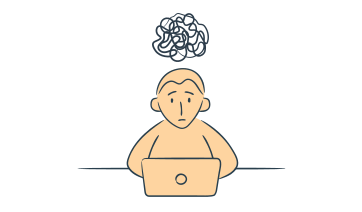
A teenager slams a door, a parent’s voice rises to meet the noise, and ten minutes later neither of them could say who started it. Families who end up searching for dialectical behavior therapy skills often describe some version of this scene. It is rarely one catastrophe. It is a reflex that runs faster than anyone’s intentions.
This post looks at how a handful of DBT skills interrupt that reflex, what the early research on teaching them to parents does and does not show, and what a skills group looks like for a household that wants structured practice.
Why Family Conflict Escalates So Quickly
When one person in a home has big, fast emotions, everyone else adapts around them. Parents learn to read a face at the front door before saying hello. Siblings go quiet. Over time the whole household calibrates to its most reactive member, so a single raised voice can set off several nervous systems at once.
DBT treats this as a skills gap rather than a character flaw, which is a relief to many parents who have spent months privately wondering what they are doing wrong. DBT emotional regulation skills begin from a plain idea: a feeling has to be named accurately before anyone can work with it, and chronic stress scrambles that step. Fear comes out as anger. Exhaustion gets mistaken for not caring.
Mindfulness Creates the Gap
The first useful thing a parent can do in a heated moment is notice what is happening inside their own body. DBT calls this Observe, and it means catching the tight chest or the urge to lecture before deciding what to do with either one. Describe comes next, which turns the raw reaction into a plain statement. “I’m noticing an urge to yell back” sits very differently in the mind than “I have to shut this down right now,” even though the two usually blur together without practice.
That small gap is often the first real leverage a parent gets over a response that used to feel automatic. DBT mindfulness exercises for parents tend to start small for exactly this reason, sometimes a single minute of attention to breathing at the kitchen counter, so the habit exists before the hard conversation does.
The same skills help after a slip. A parent who snaps on a stressful Tuesday often follows it with a harsh verdict on themselves, and describing what happened without the verdict attached keeps one bad evening from becoming a story about being a bad parent.
The First Ten Minutes of a Crisis
Some moments are not the time for insight. A disclosure about self-harm, a shouting match that has crossed a line, or a phone call at two in the morning floods the body faster than reasoning can catch up. Distress tolerance is built for this window, and its goal is modest: get through the next few minutes without making things worse.
Among the DBT distress tolerance techniques families practice most is TIPP, which works on the body directly through temperature change, brief intense movement, and slow paced breathing. A parent whose heart rate spikes at a difficult text message might use it before replying, buying enough distance to answer from a steadier place. STOP covers the half-second when someone reaches automatically for car keys or an ultimatum, and asks them to pause and look at what is actually happening rather than what feels urgent.
Radical acceptance sits underneath both skills and is often misheard as approval. It means admitting that a loved one is struggling tonight and that no single conversation will fix it, so the energy spent fighting that fact can go toward getting through the evening. In a pilot study of a parent-only DBT skills group offered in a public mental health system, parents reported feeling less helpless and having fewer daily power struggles with their children. It was a feasibility study without a comparison group, so it shows the format can work in practice rather than proving it caused the change.
Validation Without Giving In
Family strain is relational at its core, which is why interpersonal skills carry so much weight here. DBT interpersonal effectiveness gives parents a way to hold a limit and keep the relationship intact in the same sentence, something households in crisis often struggle to do. They tend to swing between over-accommodating and shutting down.
Validation is the skill that does the heaviest lifting. It means telling someone their feelings make sense given what they are dealing with, without agreeing to the behavior or dropping the limit. A parent might say, “It makes sense you’re furious about the curfew, you really wanted to be there. The curfew still stands tonight.” Staying gentle and curious while saying it is what the GIVE skill describes.
When the situation calls for asking directly for something to change, the DEAR MAN sequence keeps the request factual and specific instead of buried in tone. In one mixed-methods evaluation of parent and carer groups, participants named validation as the most influential skill they learned and described a calmer home by the end of the program. That study had no control group, so some of the improvement may have come from the teenagers’ concurrent treatment or simply from time passing.
Does the Whole Family Need to Take Part for DBT Skills to Help?
No. Comprehensive DBT for adolescents is designed to include parents, but the research on parent-only and parallel groups suggests one person learning and using these skills can shift how a household runs, especially around validation and de-escalation. Full buy-in from everyone is not required to begin.
The strongest comparison so far comes from a pilot randomized trial of parallel parent and teen groups. Adolescents whose parents attended their own concurrent skills group showed larger drops in anxiety and depressive symptoms than adolescents who trained alone, and families reported far more positive interactions each week by the end of twelve weeks. The trial was small, and larger studies will need to confirm which families benefit most.
Who Can Join DBT Skills Groups?
Adults, adolescents, and parents can all join, usually in separate age-appropriate groups. The program is psychoeducational, so it teaches skills rather than treating a specific condition. Families can enroll together or individually, with a parent in one group and a teen in another.
Part of what makes this useful for households is that psychoeducation hands everyone the same working explanation of emotion dysregulation. In a family under strain, one person calls the behavior manipulation, another calls it illness, and a third insists it will pass with enough discipline. Those theories rarely get said aloud, yet they shape every reaction.
Scheduling is its own obstacle when several people need the same program. A virtual group means no one drives across town after work or leaves school early, and families tend to attend more consistently when the logistics are lighter. A DBT skills group online can also sit alongside any individual or family therapy a household already has.
What Happens in a DBT Group Session?
A typical session opens with a short mindfulness practice, then checks in on how skills went at home during the week. The facilitator teaches one new skill with concrete examples, and the session closes with a practice assignment for the days ahead. It is a teaching format, not individual psychotherapy or family therapy.
People in the same group often grab onto different skills first. One parent arrives in the middle of repeated crises and leans on distress tolerance for weeks. Another is worn down by arguments that never resolve and cares most about validation. Virtual DBT skills training lets each of them practice in their own kitchen, then bring back what happened, awkward attempts included.
Taking the Next Step
For readers who recognize the door-slam-to-shouting-match pattern described here and want structured practice with TIPP and validation, our online DBT skills groups teach the full four-module sequence with a facilitator and a small group of peers. It is one option for people who would rather practice these skills alongside others than piece them together alone.
The full research behind each of these skills, along with a closer look at how each of the four skill modules applies to family life, is covered in our comprehensive guide on DBT for families in much more depth.
{{promo-banner-1}}