.svg)
For a lot of LGBTQ+ people, daily life carries a quiet extra weight. There's the fear of rejection, the exhaustion of explaining yourself again and again, the grief of an unsupportive family member, and sometimes the very real risk of hostility just for existing openly. None of that is in your head, and none of it is something willpower alone can fix.
That weight has a name in mental health research: minority stress. It describes the way LGBTQ+ individuals carry both external pressures, like discrimination and social rejection, and internal ones, like internalized shame or constant anticipation of rejection, that accumulate over time and wear down resilience. For LGBTQ+ teens especially, a stigmatized identity layered on top of normal adolescent stress leaves them particularly vulnerable to self-harm and suicidal thoughts, something researchers say is easy for clinicians to miss if they aren't specifically looking for it.
Dialectical behavior therapy groups weren't designed with this experience in mind. But the skills inside DBT, noticing a feeling without being swept away by it, tolerating distress without resorting to self-destructive coping, and communicating needs clearly, turn out to map closely onto what a lot of LGBTQ+ people are already trying to do every day. This isn't a hypothetical fit either. One UK adolescent DBT service found that 60 to 70 percent of its clients identified as LGBTQ+, with engagement and outcomes comparable to their peers.
For a deeper dive into this topic, check out the conversation with TheraHive co-founder Dr. Jesse Finkelstein and Dr. Kiki Fehling below.
Minority Stress Isn't One Size Fits All
Minority stress doesn't show up the same way for everyone carrying it. A Black trans woman, a closeted gay man in a religious immigrant family, and a nonbinary teen in a rural school district are all under pressure, but the specific shape of that pressure looks different for each of them. A queer person of color is often managing racism and homophobia or transphobia at the same time, sometimes from the same people or institutions. Someone in a religious family may be navigating a conflict where coming out feels like choosing between their faith community and themselves. A trans person in a rural area may be dealing with isolation and lack of access on top of everything else.
None of this changes which DBT skills are available. It changes which ones deserve the most attention, and it's part of why effective support means asking specifically which identities and which stressors are at play, not just checking an LGBTQ+ box once and moving on.
Staying With a Hard Thought Instead of Drowning in It
Take a transgender teenager lying awake with the thought, "my family is going to reject me." DBT's mindfulness skills aren't about arguing that thought away or deciding whether it's true. They're about noticing it show up, noticing the fear that comes with it, and naming it plainly, without piling on extra judgment like "I'm being dramatic." That's different from reassurance, and it's different from spiraling. It's simply staying in contact with what's actually there.
This same notice-and-name move helps after a hard coming out conversation or an invalidating comment from a relative, gently bringing attention back, again and again, to the present moment instead of replaying the conversation for the tenth time.
DBT's idea of Wise Mind matters here too. It's often described as a kind of inner peace, but that's not quite accurate. It's what emerges when emotional urgency and logical clarity come together rather than fight each other. After a hostile comment, emotion mind alone might push toward an impulsive blowup, while reasonable mind alone might flatten how much it actually hurt. Wise Mind holds both: acknowledging the hurt and the unfairness of it, while still choosing, on purpose, how to respond.
Getting Through Hard Moments
The moments DBT's distress tolerance skills are built for aren't abstract for this community. A slur at school, a coming out conversation that goes sideways, a sudden wave of dysphoria, a parent's voice on the phone, these are the real scenarios this skill set exists for. Fast, physical techniques like cold exposure, paced breathing, or grounding through the senses bring an activated nervous system back down enough to choose what happens next, instead of reacting from a flooded place.
Radical acceptance is probably the most well known DBT skill, and also the most misunderstood. Accepting that a parent isn't going to come around right now doesn't mean accepting that their reaction is okay. Those are two separate things, and DBT keeps them carefully apart.
This connects to something DBT calls willingness versus willfulness, and it matters a lot here. Willingness means working with reality as it is, not happily, not passively, just without piling extra resistance on top of pain that's already there. Here's the part that matters most for this community specifically: willfulness toward real injustice usually comes from a completely reasonable place. A queer person's anger at ongoing discrimination, at a family's slow or absent acceptance, or at legislation actively targeting their existence, isn't a character flaw or a skill they haven't learned yet. DBT never asks anyone to be willing toward the injustice itself, only to be willing to act effectively in their own life while that anger is present and justified.
When the Feeling Makes Complete Sense
DBT's emotion regulation skills start with a question that gets skipped far too often: does this emotion actually fit the situation? A bisexual adult wrestling with internalized shame might find that shame doesn't hold up against the facts, since being bisexual isn't shameful. That's an unjustified emotion, and the path forward involves opposite action, doing the thing shame wants you to avoid, like telling a friend something you'd normally keep quiet.
But picture a transgender teenager whose family has gotten more hostile since they came out, feeling real fear ahead of a holiday gathering. Checking the facts here doesn't produce reassurance, it confirms the fear is accurate. This is a justified emotion, and DBT doesn't ask anyone to talk themselves out of a correct read on danger. The work shifts from changing the feeling to tolerating it while still acting effectively, using distress tolerance skills to get through the moment and interpersonal effectiveness skills to hold a limit without over-apologizing for existing.
This same logic applies to grief over a parent who hasn't come around, or dysphoria in a body that doesn't match who someone is. These are often completely justified responses to real loss or real incongruence, not distortions that need correcting. The goal isn't making the feeling disappear. It's building the capacity to feel it fully while still functioning and still moving toward a life that feels like one's own.
Picking the Right Goal Before the Right Words
The step people often skip with interpersonal effectiveness is figuring out, before reaching for a skill, what they're actually trying to accomplish in a specific conversation. DBT names three goals that can genuinely compete: getting the outcome you want, protecting the relationship, or keeping your self respect intact. In most coming out conversations or requests to use a chosen name, the outcome you actually want, full agreement on the spot, often isn't fully in your control. What is in your control is whether you act in line with your own values and walk away with your dignity, which is a self respect goal best served by the FAST skill, not the more commonly taught DEAR MAN.
DEAR MAN still earns its place when the ask is concrete and genuinely achievable, such as requesting a manager use correct pronouns in official emails. And when the relationship itself is worth protecting even at some cost to the other two goals, often the case in family-of-origin situations during a slow acceptance process, the GIVE skill is the better fit.
Adolescents in DBT programs consistently name connection with accepting peers as a protective factor, and building that network, through a GSA, an online community, or a smaller circle of accepting friends, is itself an interpersonal effectiveness goal, not just a nice side effect of treatment.
What the Research Actually Shows
The evidence base here is still young, but what exists is encouraging. One comprehensive adolescent DBT program found LGBQ participants showed improvements in emotion regulation, depression, borderline symptoms, and coping that were statistically comparable to their non-LGBQ peers. A separate UK National and Specialist CAMHS DBT service found no significant differences in outcomes between sexual and gender minority adolescents and their cisgender, heterosexual peers, which matters because it reflects an actual clinical service rather than a small research trial.
Qualitative interviews add a layer numbers can't. Gender and sexuality minoritized adolescents in DBT described the program as explicitly non judgmental, and felt the skills themselves applied regardless of identity. At the same time, those same teens wanted therapists to proactively bring gender and sexual identity into the conversation rather than waiting to be asked, and pointed to connection with accepting community as a meaningful protective factor.
Researchers have also started publishing structured, affirming adaptations rather than leaving clinicians to improvise. One recent paper walks practitioners through DBT STEPS-A module by module, with specific guidance for adapting language and coping strategies to reflect minority stress.
A Starting Point When Full Therapy Isn't Accessible Yet
Not everyone who wants these skills has access to full clinical therapy right away, and for a lot of LGBTQ+ people, that's a real access problem rather than a preference. Affirming providers can be hard to find, insurance coverage can be inconsistent, and full DBT, often weekly individual sessions plus group plus phone coaching, is a significant commitment even without those barriers. This is where structured online DBT skills training can offer a meaningful, lower stakes starting point, building a vocabulary for emotions and a toolkit for crisis moments before, or alongside, any decision about individual therapy.
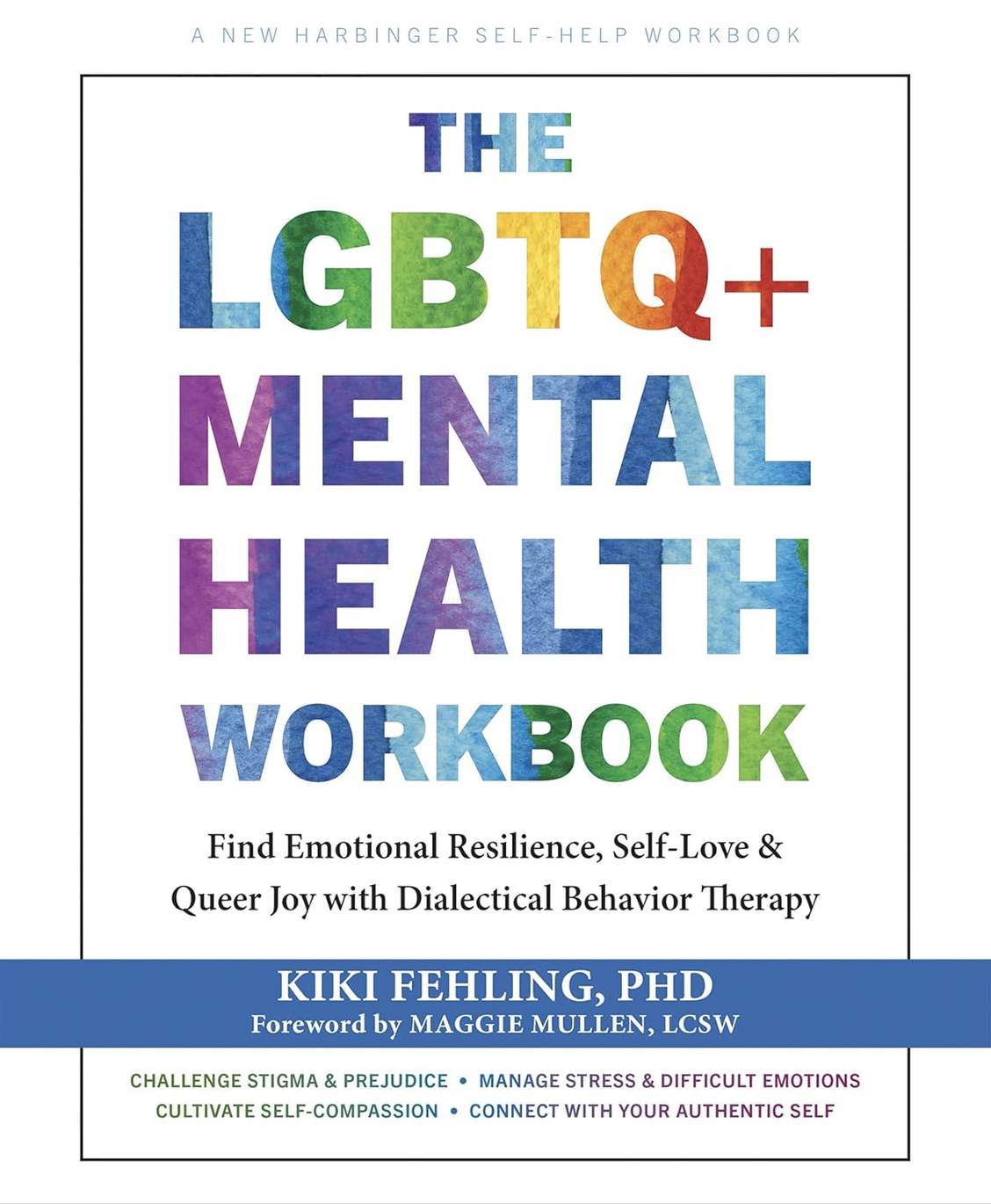
For readers wanting identity-aware framing built into the material from the start, The LGBTQ+ Mental Health Workbook by Dr. Kiki Fehling, a queer DBT psychologist, takes that approach directly, moving through chapters built around queer and trans life while still grounding each one in standard DBT skills.
A Toolkit Worth Building, Together
Mindfulness offers a way to stay present with identity related fear without being swept away by it. Distress tolerance provides real tools for surviving acute moments of stigma. Emotion regulation builds a steadier relationship with shame, grief, and dysphoria, including the feelings that are entirely justified given what someone's up against. Interpersonal effectiveness gives language for the hardest conversations while also helping build the accepting community that protects against minority stress in the first place.
The research so far is consistent: DBT works about as well for LGBTQ+ clients as it does for anyone else, and clients themselves report finding real safety in its nonjudgmental structure. If any of this felt familiar, TheraHive's full guide on DBT for LGBTQ+ individuals goes deeper into each of these skills and the full research behind them.
{{promo-banner-1}}


.svg)
.svg)


.avif)