DBT for Substance Abuse

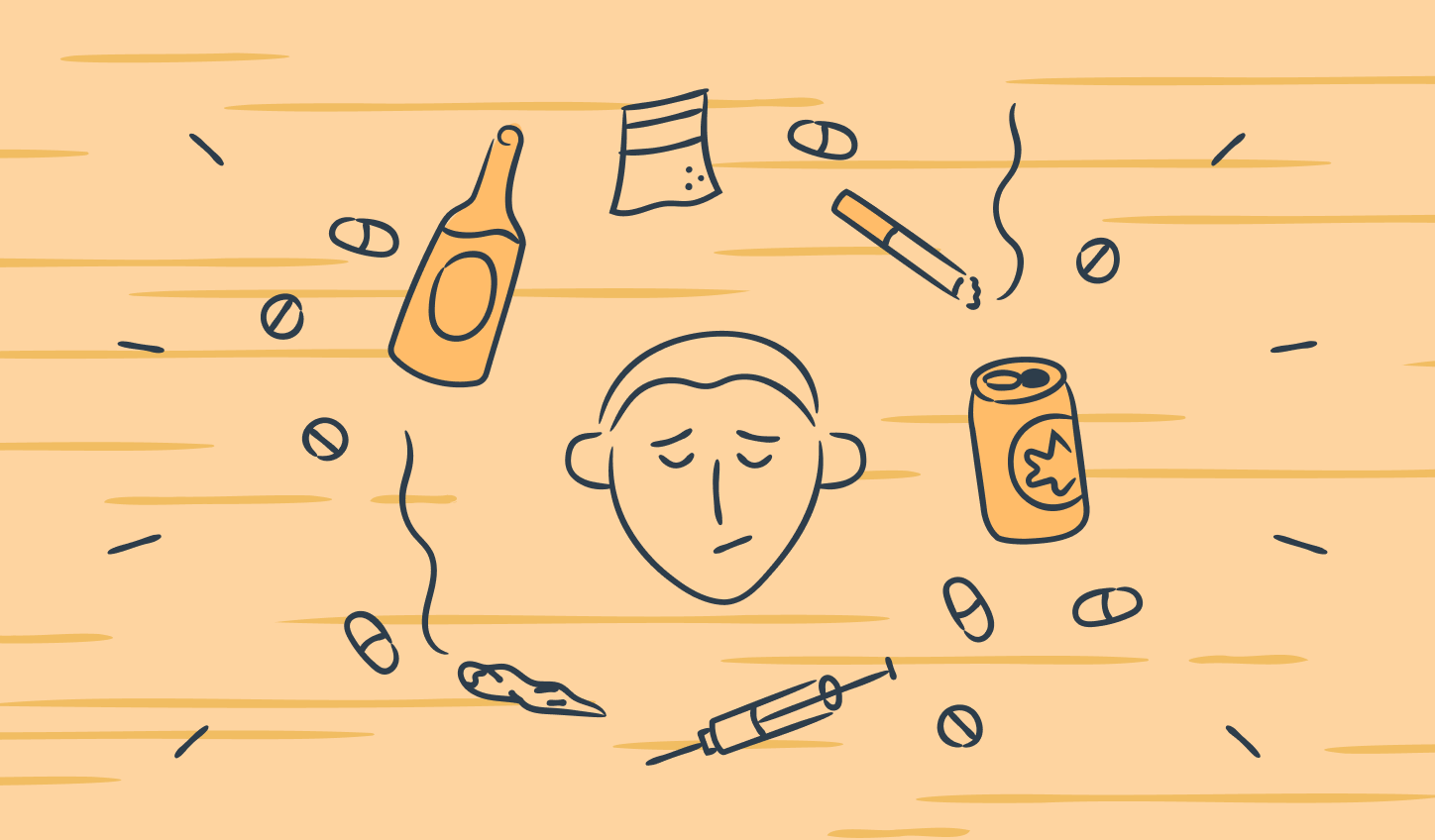
A craving doesn't ask if you're ready for it. It just shows up and expects an answer right away. DBT treats that moment, and the buildup that leads to it, as something a person can actually learn to work with. This guide walks through how DBT's four skill modules, mindfulness, distress tolerance, emotion regulation, and interpersonal effectiveness, apply specifically to substance use and what the research says about why the approach works.
Jump to the topics:
Overview of DBT for Substance Use
Dialectical Behavior Therapy is a skills-focused psychotherapy originally developed by psychologist Marsha Linehan to treat chronically suicidal patients with borderline personality disorder. Clinicians using it with that population noticed early on that many of the same patients were also struggling with drug or alcohol use, and Linehan later adapted the model specifically for substance use disorders. Unlike some forms of talk therapy that focus mainly on insight, DBT teaches concrete coping skills and holds a balance between accepting where a person is right now and actively working to change the behavior that's hurting them. That combination tends to matter a great deal for substance use, where all-or-nothing thinking, either total control or total collapse, is often part of what keeps the cycle going.
Substance use disorders are closely tied to difficulty regulating emotion: people often use to escape, numb, or manage a feeling they don't yet have another way of handling. A study examining DBT skills and daily urges to use alcohol and other substances found that emotion regulation and mindfulness skills were linked to lower urges among people who came into treatment using frequently, and that distress tolerance and interpersonal effectiveness skills tracked with the same drop, a pattern across all four of the modules covered in this guide. A 2022 systematic review of DBT skills training for substance use disorders reached a similar conclusion, finding the approach acceptable and feasible across the studies reviewed, with early support for both reducing substance use and strengthening emotion regulation in that population. Below is a closer look at how each part of the model contributes to that outcome, before the rest of this guide breaks each one down in more depth.
- Mindfulness interrupts the pull toward using before it turns into a decision. Dialectical Behavior Therapy for Substance Abusers, the paper in which Linehan and coauthor Linda Dimeff laid out DBT's substance-use adaptation, describes a dialectic between an "addict mind," pulled toward the relief of using, and a "clean mind," which pushes back so hard against that pull it sets up an all-or-nothing standard nobody can sustain. Mindfulness is what makes the synthesis of the two, called clear mind, possible, since it's the skill that lets someone notice the pull without either suppressing it or getting swept into it.
- Distress tolerance covers the minutes reasoning can't reach. A craving rarely waits for someone to think their way out of it first. A pilot trial testing DBT against a psychoeducation control group for marijuana use disorder found meaningfully higher completion rates in the DBT group, with its distress tolerance tools pointing toward a workable way to bring craving intensity down in the moment it hits.
- Emotion regulation addresses what builds up before the craving arrives and what to do once it's already there. Using is rarely random; it tends to follow a buildup of stress, shame, or exhaustion, along with an instinct to isolate right when connection would help most. This module works on that buildup directly and includes skills like opposite action, which asks a person to move toward what they'd normally avoid instead of using to escape it.
- Interpersonal effectiveness keeps relationships from unraveling further. Substance use tends to erode trust through missed commitments and conversations avoided, and the isolation that follows only makes using more likely. This module gives people concrete ways to ask directly for support and repair strained relationships instead of quietly withdrawing.
Taken together, DBT approaches substance use both in the moment, through skills built for surviving a craving without acting on it, and over the longer term, by reducing the emotional buildup and relationship strain that make using more likely in the first place. The sections below walk through each of these skills in more depth, with concrete examples of how they apply to substance use specifically. After going through the different modules, you can then combine multiple DBT skills into effective sequences to change behavior. Check out the video below to learn more about skill stacking.
DBT vs. Other Treatments
Standard CBT and DBT are both structured, skills-based therapies, and DBT was built directly on CBT's foundation. The difference shows up in how each one handles a hard moment. CBT leans on cognitive restructuring: catching a distorted thought about using and testing it against the evidence. DBT does that too, but layers in something CBT doesn't emphasize as heavily, radical acceptance of where someone actually is right now, alongside the push to change their behavior. For people whose substance use is tangled up with intense emotional dysregulation or trauma, that layer matters. A comparative study on group-based CBT and DBT for depressive symptoms in women with substance use disorders found the two performed comparably on mood outcomes, but direct, confrontational change strategies common in standard CBT can land as invalidating for highly reactive patients, sometimes triggering the exact shutdown or dropout the therapy was trying to prevent.
Twelve-Step and community-based validation models sit almost at the opposite end of that spectrum, prioritizing warmth and acceptance over direct behavioral pressure. That approach has a real strength: it keeps people in the room. A trial comparing DBT to Comprehensive Validation Therapy plus 12-Step participation in opioid-dependent women found the validation-based track held onto 100% of participants over a year, compared to 64% for DBT. But retention wasn't the whole story. Urinalysis results showed opiate use climbing again in the final months of the validation-only track, while DBT participants kept their reductions steady through the full year, evidence that acceptance alone builds alliance but doesn't necessarily sustain long-term behavioral control the way concrete skills training does.
None of this makes DBT a universal first choice. It shines especially where standard approaches hit a wall: severe emotional dysregulation, co-occurring borderline personality disorder, or a pattern of dropping out of more confrontational treatment. For substance use that's less entangled with those complications, CBT or 12-Step-based care may be entirely sufficient, and often gets someone in the door faster. What DBT adds is a specific answer to a specific problem: how to keep pushing for abstinence without losing someone the moment change starts to feel invalidating.
Treatment as usual, the standard mix of outpatient counseling most people encounter first, tends to lag behind on both fronts. Linehan's original trials comparing DBT to TAU in drug-dependent women with borderline personality disorder found DBT produced significantly greater reductions in drug use, verified through urinalysis, along with better retention and stronger social adjustment at 16-month follow-up. TAU's more heterogeneous, less structured format seems to struggle particularly with the dropout and disengagement that high-acuity patients are already prone to.


Psychoeducation as a Starting Point for Substance Abuse
Psychoeducation is a structured, educational approach to a mental health condition, teaching people to understand and manage what they're dealing with through information, skills, and practice, rather than delivering ongoing clinical treatment the way individual psychotherapy does. For substance use specifically, that distinction turns out to matter quite a bit, because a fair amount of the research suggests structured psychoeducation isn't just an add-on to "real" treatment, it moves outcomes on its own. A randomized trial testing a short-term, structured psychoeducational intervention for substance use disorder with co-occurring antisocial personality disorder found that, compared to treatment as usual, participants who received the psychoeducational program had more days abstinent and less severe drug use at the 3-month follow-up, even though attendance across the study was far from perfect, which is typical for this population.
What seems to be doing the work isn't just information transfer. A secondary analysis of that same trial found that participants who felt they'd actually been helped by the psychoeducation, not just exposed to it, were the ones who went on to have more abstinent days and lower dropout risk, and that this sense of being helped statistically accounted for a meaningful share of the program's overall effect. In other words, psychoeducation seems to work in substance use treatment the same way it tends to work elsewhere: not through the material alone, but through whether it actually lands for the person receiving it.
That evidence holds up even in lower-touch, more scalable formats. A randomized trial comparing a digital relational-agent intervention to an email-delivered psychoeducational control for problematic substance use found that both conditions produced significant, comparable reductions in substance use occasions, sustained at one-month follow-up, evidence that even a relatively simple, structured psychoeducational format can move the needle, not just the more elaborate app-based intervention it was being tested against.
This is where TheraHive's approach comes in: putting DBT's four modules into practice through a live, group-based format rather than leaving them as concepts on a page. The sessions themselves are psychoeducational, not a clinical treatment for substance use disorder on their own, which means the focus stays on teaching and rehearsing the skills, alongside whatever therapy, medical care, or recovery program a person already has in place, not in place of it. That line between teaching a skill and treating a diagnosis is a real one worth understanding on its own terms, since psychoeducation and psychotherapy serve different, complementary purposes, and substance use disorder in particular often benefits from both running in parallel rather than one substituting for the other.
Meeting virtually also removes some of the friction that keeps people from showing up consistently in the first place, commuting, finding coverage for an hour, sitting in a waiting room on a day that already feels precarious, and reflects a broader shift toward virtual delivery in mental health and addiction care more generally.
Mindfulness: Noticing the Urge
Mindfulness in DBT means paying attention to the present moment, on purpose, without judgment. It's the foundation the other three modules sit on top of. For someone working on substance use, it offers something specific: a way to notice a craving, even an intense and completely real one, without either shoving it down or getting swept into acting on it.
Picture someone driving home past the liquor store they used to stop at most nights. The old pattern doesn't ask permission. The car slows down almost on its own, and a thought shows up: "just one, it's been a rough day." Mindfulness isn't about arguing with that thought or deciding whether it's accurate. That's not what this skill is for. The Observe skill asks the person to simply notice what's happening, the pull in the chest, the thought as it arrives, without piling a story on top of it.
The Describe skill goes one step further, putting the experience into plain, factual words: "I'm having the thought that I want to stop," rather than the fused version, "I need to stop." That difference looks small on paper. In the moment, it's the gap between being run by an urge and having a few seconds of room around it, which is usually all a person needs to choose differently.
That same noticing move matters after a craving has already passed, too, in the restless hours that often follow turning one down. Instead of fighting the leftover irritability or replaying the moment over and over, mindfulness redirects attention back to the present, again and again: the breath, the hands on the wheel, what's actually happening right now instead of the argument still running in the person's head.
DBT's Wise Mind skill gets described sometimes as a kind of calm, a peaceful place to retreat to. That's not quite accurate, and getting it right matters here, because so much of substance use plays out in the gap between two other states. Wise Mind is what happens when emotion mind, urgent and feeling-driven, the part that wants relief right now, integrates with reasonable mind, logical and fact-based, the part that can recite every reason not to use without feeling any of them. Emotion mind alone drives the reach for a drink or a pill in the middle of a hard night. Reasonable mind alone produces the kind of white-knuckled abstinence that holds for a while and then cracks, because it never actually deals with what the person is feeling underneath. Wise Mind holds both at once: acknowledging that the craving is real and intense, while still choosing, on purpose, not to act on it. That's not the same as willpower. It's having enough accurate information from both sides of the mind to act from a clear place instead of a reactive one.
Try one of our brief and calming mindfulness exercises below. For the full playlist of free mindfulness exercises, visit our YouTube channel


Distress Tolerance: Getting Through a Craving
Distress tolerance is DBT's crisis-survival module, a set of skills for getting through an intensely painful moment without creating a second problem on top of the first one. It doesn't ask whether the craving makes sense; that's a job for emotion regulation. Distress tolerance just asks whether a person can get through the next few minutes without acting on what the pocket guide calls a crisis urge, an urge to do something that offers immediate relief but makes the underlying situation worse. A craving is close to the textbook definition of a crisis urge, which is part of why this module tends to be the most immediately useful one for substance use.
The STOP skill is often the first move: stop, don't react, take a step back from whatever triggered the urge, observe what's actually happening in the body and the surroundings, then proceed mindfully instead of on autopilot.
From there, TIPP, cold temperature, intense exercise, paced breathing, and paired muscle relaxation, works on the body directly, changing physiology quickly enough to blunt an acute urge. Someone whose craving spikes at nine at night, alone, with easy access to what they're trying to avoid, might hold ice water against their wrists or step outside for a few minutes of hard, fast movement. None of this argues the craving away. It changes the physical state feeding it long enough for the wave to crest and start receding, which is usually all a craving needs to do on its own if nobody acts on it.
Radical acceptance plays a different role. It means accepting that the craving is here, exactly as intense as it is, without that meaning approval of it or surrender to it. Fighting the fact that the urge exists only adds suffering on top of a moment that's already hard. Accepting that it's here, and that it will pass whether or not it's acted on, frees up energy for actually getting through it. To put this into practice, try out the mindfulness exercise below.
This connects to something DBT calls willingness versus willfulness. Willingness means working with reality as it is, not happily, just without adding resistance on top of pain that's already there. Willfulness looks like refusing to do that: insisting recovery shouldn't be this hard, refusing any step that even implicitly admits the old way isn't working anymore.
A lot of people beat themselves up for feeling willful about giving something up that used to help them cope. DBT treats that resistance as understandable, not as a character flaw, while still asking the person to be willing to act effectively in their own life even while that resistance is present.
An old pattern reasserting itself under stress isn't a sign that the work isn't working. It's how conditioned behavior actually gets rewired. The video below breaks down the neuroscience behind why repetition, not willpower, is what makes a new response stick.
Emotion Regulation: Reducing Vulnerability to Cravings
Emotion regulation addresses what happens upstream of the craving, the buildup that makes a person more likely to reach for a substance in the first place. It works on two fronts: lowering the everyday vulnerability that intensifies emotion, and changing what a person does once an emotion has already shown up.
The PLEASE skill covers the first front: treating physical illness, eating in a way that supports mood rather than spikes and crashes it, balancing sleep, and getting the body moving. None of this sounds specific to substance use on its own, but skipped meals, exhaustion, and disrupted sleep are reliable setups for relapse, and this module treats them as clinical targets rather than lifestyle advice on the side.
Observing, describing, and naming emotions covers a different gap. A lot of people who use substances describe the trigger as just "feeling bad" without much more precision than that, and it's hard to regulate an emotion nobody has actually named. Learning to separate "I'm anxious" from "I'm ashamed" from "I'm lonely" gives a person three different problems with three different solutions, instead of one vague, overwhelming feeling that a substance has always been reliable at numbing.
The second front deals with what to do once an emotion has already arrived, and shame in particular tends to precede substance use for a lot of people. Someone who feels a wave of shame after a difficult conversation might have a well-worn instinct to isolate and use, alone, where no one can see.
Opposite action asks that person to notice the urge to withdraw and deliberately do the reverse: call a friend, go to the group session anyway, stay in the room instead of leaving it. It's uncomfortable in the moment, and it's often the thing that breaks a pattern that isolation alone would keep feeding.
Cope ahead works before the moment ever arrives, rehearsing a high-risk situation in advance, a wedding with an open bar, a holiday at a relative's house, a specific friend's phone call, and mentally walking through exactly which skills to use, so the response feels familiar instead of improvised when the actual moment shows up.
To see cope ahead planning and other emotion regulation skills taught in real time with a real TheraHive student, check out our Thriving With DBT podcast episode below featuring TheraHive co-founder Dr. Alicia Smart.


Interpersonal Effectiveness: Rebuilding Trust
Substance use tends to leave a trail through a person's relationships: missed commitments, conversations avoided, trust that has to be rebuilt one interaction at a time. Interpersonal effectiveness gives people scripts and structure for exactly this kind of repair work, which is often harder than the internal skills because it involves someone else's reactions, not just one's own.
The DEAR MAN skill helps with asking directly for what a person needs without over-apologizing or escalating into conflict. Someone newly working on their drinking might need to tell family members they can't attend a holiday gathering where alcohol will be everywhere, without the conversation turning into a rehash of every past incident: describing the situation factually, expressing how it feels using "I" statements, asserting the actual request, and staying mindful of that goal even if someone tries to change the subject or push back.
Rebuilding trust also depends on the other direction, how a person shows up once someone else is upset with them, and this is where the GIVE skill comes in: being gentle, acting interested, validating the other person's side even without agreeing with it, and keeping an easy, non-defensive manner. A partner who's still frustrated about a broken promise doesn't need to be convinced they're wrong to be frustrated. Validating that frustration, without necessarily agreeing to everything they're asking for, is often what actually starts repairing a relationship that substance use has strained.
Alongside it, the FAST skill focuses on keeping self-respect intact during hard conversations: being fair to both people involved, skipping unnecessary apologies, sticking to personal values under pressure, and staying truthful. In practice that often means setting a clear limit and holding it even when someone pushes back. Saying no to a friend who keeps inviting a person to the same bar, every week, is a limit, not a rejection of the friendship, and FAST gives people language for making that distinction out loud instead of just avoiding the calls or quietly resenting the invitations.
Research on DBT for Substance Abuse
The research supporting DBT for substance use goes back over two decades. One of the earlier and more direct studies, a trial testing whether DBT would be effective for drug-dependent women with borderline personality disorder when compared with treatment as usual in the community, found that participants assigned to DBT showed significantly greater reductions in drug use, measured through both structured interviews and urinalysis, across the treatment year and at a sixteen-month follow-up.
That trial used the full DBT protocol, but more recent research has looked at whether the skills-training piece holds up on its own, which matters for anyone considering a skills-only, group format like TheraHive's. A three-month randomized trial comparing DBT skills training groups to standard group therapy found lower dropout rates among the DBT skills participants, 34.5 percent compared with 63.4 percent, along with larger improvements in depression, anxiety, irritability, and anger.
A separate quasi-experimental study comparing standalone DBT skills training to the full, multi-mode version of DBT reached a related conclusion from a different angle: after six months, there were no significant differences in symptoms or suicidal ideation between the two groups, suggesting that for many people the skills themselves, not the individual therapy or phone coaching built around them, do much of the active work.
This body of research is part of why DBT skills groups are increasingly treated as evidence-based group therapy rather than a lesser substitute for individual treatment. None of it substitutes for a full clinical evaluation, and TheraHive does not diagnose or treat substance use disorders directly. The psychoeducational model is designed to build skills that support whatever treatment a person is already receiving, not to replace it.
From Understanding to Action
Substance use rarely responds to insight alone. The gap most people describe is between knowing what they should do in a hard moment and actually being able to do it once the craving is loud and the old pattern is close at hand. That's the specific gap these four skill modules are built to close, one rehearsed moment at a time.
For readers who want structured practice with tools like TIPP, opposite action, and DEAR MAN alongside others working through similar struggles, our online DBT skills groups offer exactly that kind of space, if this sounds like a fit for where you are right now.
Not ready for a full skills group yet? The Setting Intentions with DBT Skills mini course is a smaller way to start, using the same DBT foundation to build clarity on goals and create lasting change.
Frequently Asked Questions
Is DBT or CBT better for substance abuse?
Neither is universally better, and the two overlap significantly since DBT developed out of standard CBT. CBT tends to lean on cognitive restructuring, catching a distorted thought about using and testing it against the evidence. DBT keeps that work but adds radical acceptance of where a person actually is right now, alongside skills for tolerating a craving in the moment rather than only reasoning through it afterward. For substance use tangled up with intense emotional dysregulation, trauma, or a pattern of dropping out of more confrontational treatment, DBT is often worth considering. For substance use that's less entangled with those complications, CBT may be entirely sufficient and can get someone in the door faster.
Can DBT help with cravings, or just the underlying emotional issues?
Both. Distress tolerance skills like TIPP and the STOP skill are built specifically for the few minutes a craving is at its most intense, changing the body's physiological state quickly enough to blunt an acute urge without acting on it. Emotion regulation skills work on a longer timescale, addressing the stress, shame, or exhaustion that tends to build up before a craving even arrives. Someone doesn't have to choose between managing today's urge and working on what causes it; DBT is built to do both at once.
How do online DBT skills groups work for substance abuse?
An online DBT skills group typically meets on a regular schedule, often weekly, with a small group of participants and a trained facilitator, working through the same four modules covered on this page: mindfulness, distress tolerance, emotion regulation, and interpersonal effectiveness. Sessions are psychoeducational rather than individual psychotherapy, meaning the focus stays on learning and practicing skills in a structured group format, meant to complement whatever therapy, medical care, or recovery program a person is already receiving rather than replace it.
How do I know if a DBT skills group is right for me if I struggle with substance use?
DBT skills groups tend to fit best when substance use is tied to difficulty managing emotion, intense cravings that are hard to ride out, isolation that gets worse the more someone uses, or a pattern of dropping out of more confrontational treatment approaches. If those patterns sound familiar and structured skills practice feels more useful right now than open-ended talk therapy, DBT is generally worth considering as a next step.
It isn't a diagnostic tool, and it isn't a substitute for a full clinical evaluation or a higher level of care when someone needs medical detox or crisis support, those should come first. But for the specific patterns covered throughout this page, cravings, emotional avoidance, strained relationships, DBT skills groups are built to address exactly that territory.
What happens in a DBT skills group session?
A typical session opens with a short mindfulness exercise, checks in on how the past week's skill practice went, teaches one new skill from that week's module with concrete examples, and closes with a specific practice assignment for the coming week. Sessions are structured and group-based rather than open-ended discussion.
Participants aren't required to share more than they're comfortable with, and the format stays consistent from week to week, which tends to matter for substance use specifically, since predictability lowers the barrier to showing up on a week that already feels precarious. Over the course of a program, sessions move through all four modules in sequence: mindfulness, distress tolerance, emotion regulation, and interpersonal effectiveness.
Is DBT effective for substance use disorder, or is that mostly used for borderline personality disorder?
DBT was originally developed for chronically suicidal patients with borderline personality disorder, but Marsha Linehan adapted it specifically for substance use disorders after clinicians noticed significant overlap between the two populations. Research since then has tested DBT for substance use on its own terms: trials have found greater reductions in drug use compared with treatment as usual, higher completion rates than psychoeducation-only controls, and lower dropout compared to standard group therapy. It isn't only a spillover benefit from BPD treatment; it has a research base specific to substance use.
Is online DBT as effective as in-person for substance abuse?
Early research comparing online and in-person DBT skills training suggests outcomes for skill acquisition and symptom reduction are broadly comparable, though the evidence base is still smaller than for in-person DBT overall. For substance use specifically, consistent attendance tends to matter more than format, and a virtual setting can make that easier to sustain by removing commuting, childcare, or scheduling friction that might otherwise get in the way of showing up on a hard week.
References
Axelrod, S. R. (2011). Dialectical Behavior Therapy for Substance-Related Disorders. In J. J. Gross (Ed.), Handbook of Emotion Regulation (2nd ed.). Guilford Press.
Cavicchioli, M., Movalli, M., & Maffei, C. (2019). The therapeutic role of emotion regulation and coping strategies during a stand-alone DBT Skills Training program for alcohol use disorder and concurrent substance use disorders. Addictive Behaviors
Dimeff, L. A., & Linehan, M. M. (2008). Dialectical Behavior Therapy for Substance Abusers. Addiction Science & Clinical Practice
Kells, M., Joyce, M., Flynn, D., Spillane, A., & Hayes, A. (2020). Dialectical behaviour therapy skills training for the treatment of addiction: A systematic review. Addictive Behaviors
Linehan, M. M. (2015). DBT Skills Training Manual (2nd ed.). Guilford Press
Linehan, M. M., Dimeff, L. A., Reynolds, S. K., Comtois, K. A., Shaw Welch, S., Heagerty, P., & Kivlahan, D. R. (2002). Dialectical behavior therapy versus comprehensive validation therapy plus 12-step for the treatment of opioid-dependent women meeting criteria for borderline personality disorder. Drug and Alcohol Dependence
Rizvi, S. L., Steffel, L. M., & Carson-Wong, A. (2013). An overview of dialectical behavior therapy for professional psychologists. Professional Psychology: Research and Practice
Sauer-Zavala, S., Bentley, K. H., Wilner Tirpak, J., et al. (2021). Group-based DBT skills training modules are linked to independent and additive improvements in emotion regulation in a heterogeneous outpatient sample. Psychotherapy Research
Valentine, S. E., Bankoff, S. M., Poulin, R. M., Reidler, E. B., & Pantalone, D. W. (2015). The use of dialectical behavior therapy skills training as stand-alone treatment: A systematic review of the treatment outcome literature. Journal of Clinical Psychology
Weiss, N. H., Forkus, S. R., Contractor, A. A., & Schick, M. R. (2022). Emotion regulation in substance use disorders: A systematic review and meta-analysis. Addiction
Related Reading





.avif)