.svg)
You already know the feeling. Anger that flares up over something small and won't settle down. Anxiety that keeps circling even after the meeting went fine. Sadness that lingers longer than the situation seems to call for. In dialectical behavior therapy (DBT), the question isn't why you feel this way. It's what happens next if you act on it.
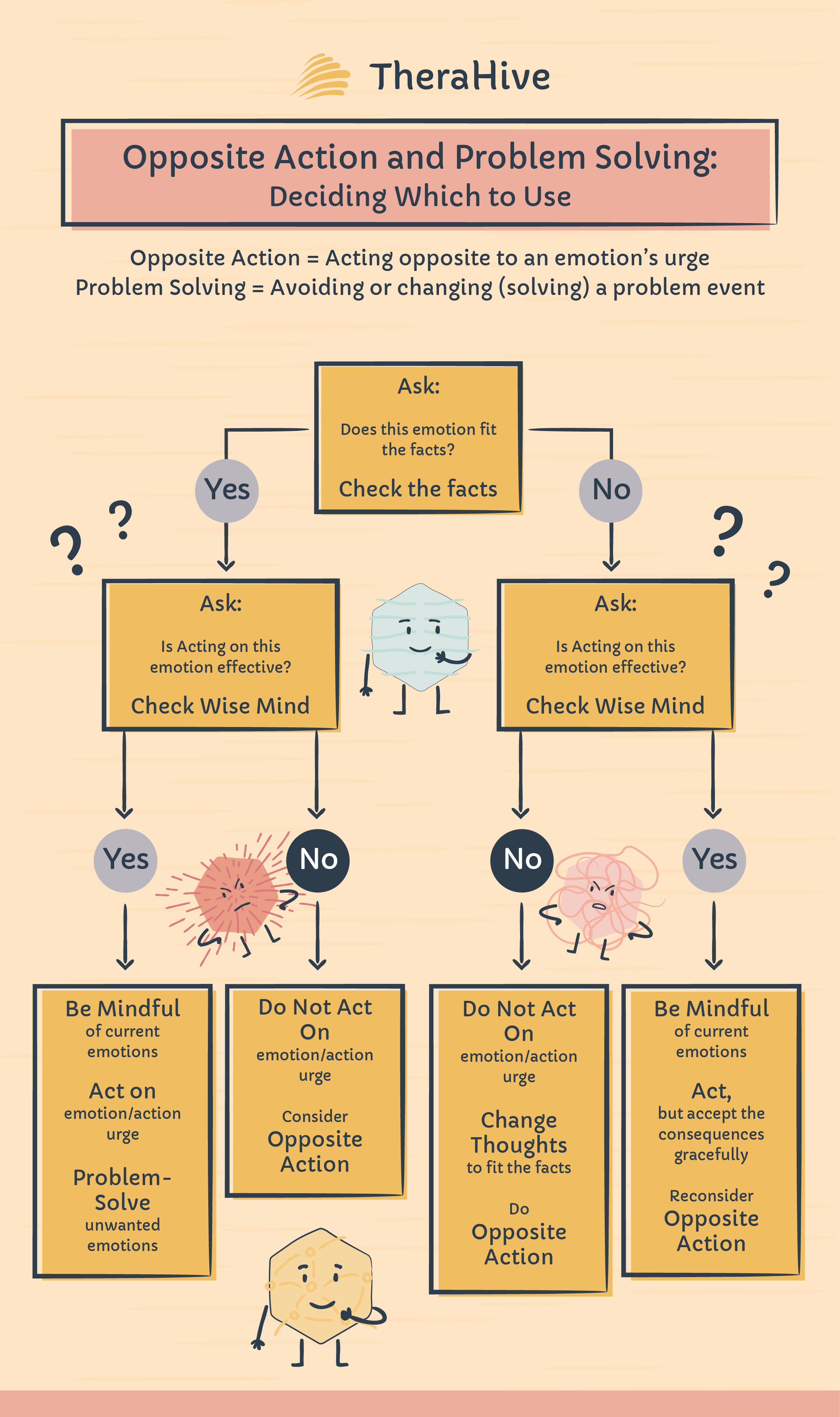
That's the gap this flow chart is built to close, walking through two quick questions that help you figure out whether an emotion is worth changing and, if it is, which DBT skill actually fits the moment.
Naming the Feeling Comes First
From a distance, a skill like Opposite Action can look like faking confidence you don't have or gaslighting yourself out of something real. It isn't either of those, and the order of operations is why.
Skills like this start by fully acknowledging what you're feeling, not glossing over it or rushing past it. Only once the emotion has been named and validated does DBT ask you to make an intentional choice about how to act, one that lines up with what actually helps rather than whatever the emotion happens to be urging in the moment.
Deciding What to Do With a Feeling
Sitting with an emotion is good advice some of the time. It's incomplete advice the rest of the time. An emotion can be worth noticing and still not worth acting on, and telling someone to simply accept whatever they're feeling doesn't help much when the real question is what to do about it next.
This flow chart exists for that gap. Rather than treating every feeling the same way, it asks two narrow, practical questions: does this emotion actually match what's happening, and would acting on it get you somewhere you want to go? The answers point toward a specific next step, whether that's leaning into the feeling, deliberately doing the opposite of what it's urging, or working the problem instead of the emotion. It doesn't moralize about the feeling itself. It just helps you decide what to do with it.
Not Every Emotion Needs to Change
It's worth saying plainly: this isn't a tool for talking yourself out of hard feelings. Grief after a loss fits the facts. Frustration with a genuinely unfair situation fits the facts too. DBT skills groups spend real time on this distinction, because reflexively second-guessing every uncomfortable emotion tends to backfire and can start to look like avoidance rather than skill.
The chart is there for the moments you already know something needs to shift, whether that's your thinking, your action, or nothing at all beyond staying present with what you feel. It's a quick way to sort out which one, rather than defaulting to whichever response feels most familiar in the moment.
The Benefits of Building This Habit
A tool like this earns its place by being fast enough to actually use in the moment. Instead of relitigating the same internal argument every time a strong feeling shows up (should I say something, should I let it go, am I overreacting), you run through the same short check and trust the process a little more each time.
That consistency matters clinically too. A pilot randomized controlled trial testing DBT skills training as a standalone treatment found that adults with depression or anxiety who learned these emotion regulation skills showed significantly larger drops in emotional dysregulation than a comparison support group, and the researchers traced much of that improvement directly to how much participants actually used the skills day to day. In other words, the benefit wasn't just being taught the concept. It came from practicing it enough that it became automatic.
A 2025 study on emotion regulation and resilience adds another layer to that. It found that people with stronger adaptive emotion regulation skills tended to be more resilient overall, and that resilience in turn helped buffer them against depression and anxiety. A tool like this isn't just about getting through one hard moment. Used consistently, it builds a pattern that tends to hold up over time.
Sharpening the Skill
There's no version of this flow chart you run through once and never need again. Emotions that don't fit the facts, or urges that would be satisfying in the moment but costly afterward, come up regularly for almost everyone. The value is in having a consistent process to run through instead of relying on whatever your mood decides in the moment.
If working through situations like these with structured, evidence-based skills training sounds useful, TheraHive's online DBT skills groups cover this exact emotion regulation module alongside mindfulness, distress tolerance, and interpersonal effectiveness, with a coach and a group of peers to help the skills actually stick.
This chart is one piece of a larger set. If you want the rest of it, our free DBT worksheet pack includes this flow chart alongside worksheets for mindfulness, distress tolerance, and interpersonal effectiveness.
{{promo-banner-1}}


.svg)

.svg)


.avif)